The best classroom management tool isn’t a fancy organizational bin or a complicated reward system.
It’s a simple system.
When learners know what to do, where to go, and how to solve small problems independently, you spend less time answering questions and more time teaching.
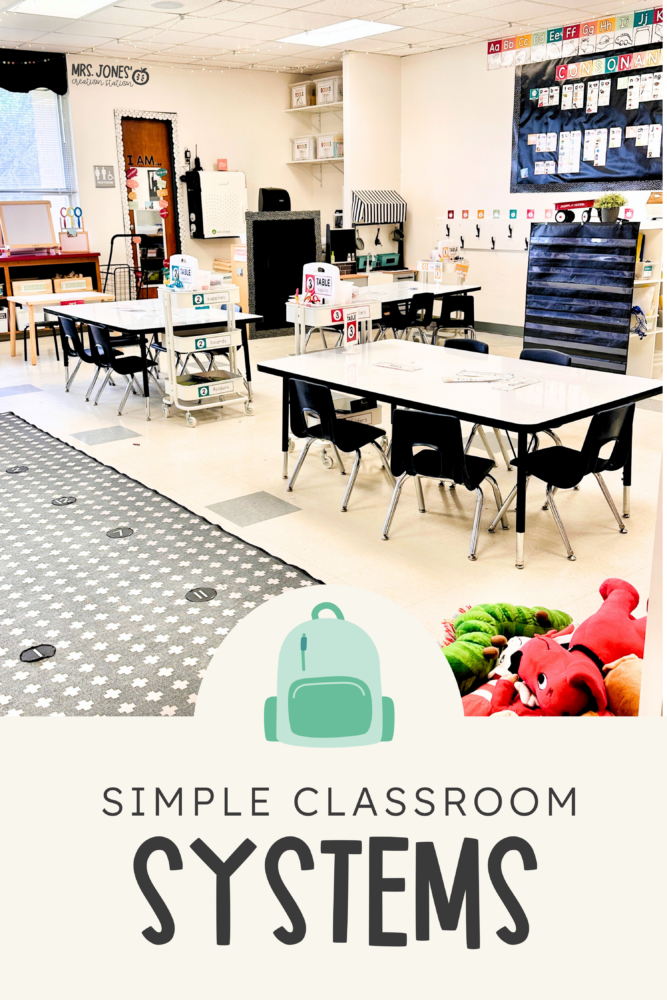
Over the years, I found that a few intentional classroom systems saved me countless interruptions throughout the day. Here are the ones I would set up first.
Classroom Supplies
Your classroom supply system should make it easy for learners to find what they need without stopping instruction.
I love using table carts whether learners share supplies or have their own. Label each section clearly and teach learners exactly where everything belongs. Think about what they will use every day, such as pencils, crayons, glue, work folders, and early finisher books.
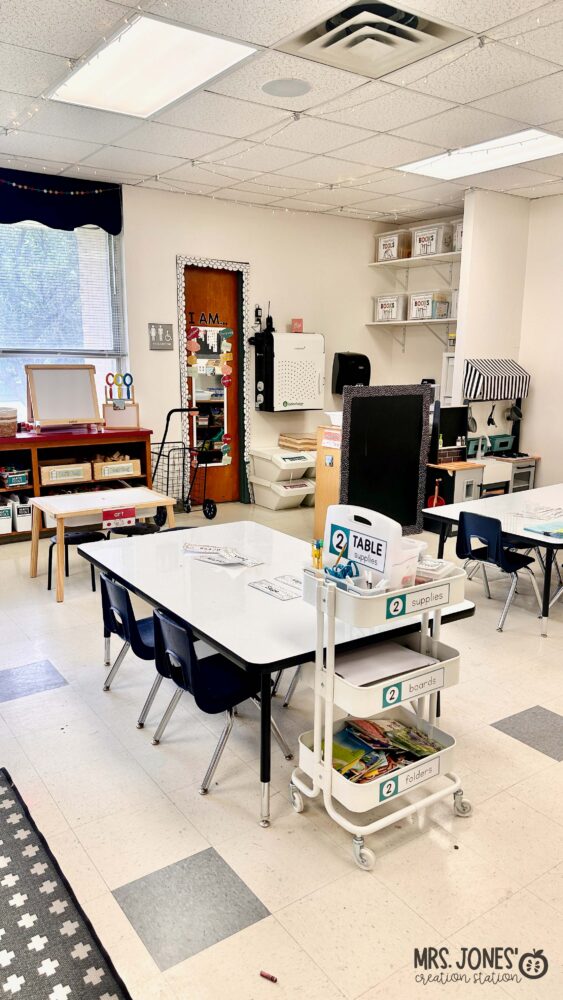
Don’t forget to plan for the “what if” moments.
- Broken pencil? Keep containers for broken and sharpened pencils at a writing station.
- Missing crayon? Have an extra crayon tub learners can access independently.
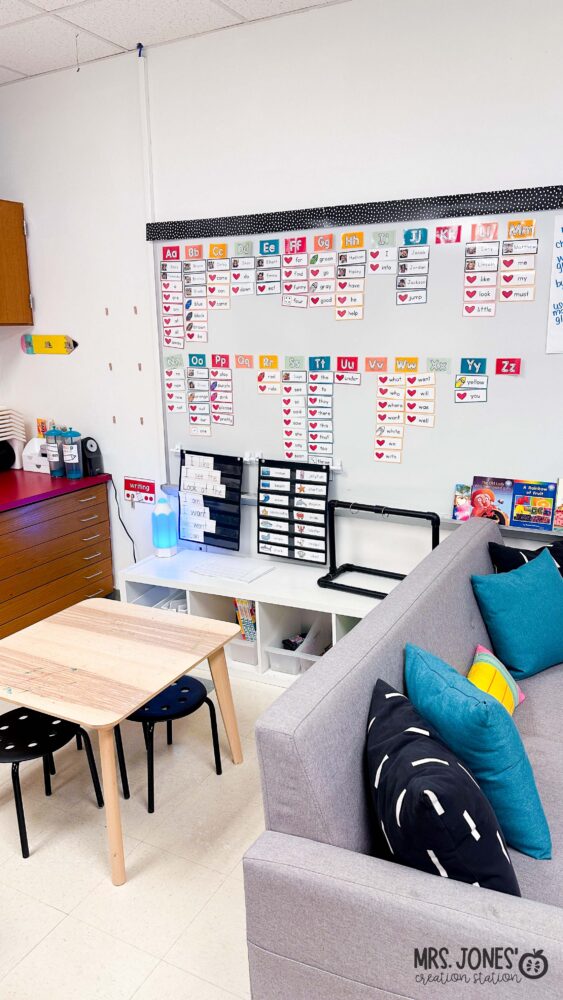
The goal is simple: solve common problems before learners have to ask for help.
Turn-In and Take-Home Work
A simple folder system can save a surprising amount of time.
I use a poly folder with one pocket for work in progress and one pocket for finished work. Every Friday, we do a quick folder check during our Fun Friday routine. Learners finish incomplete work, clean out their folders, and prepare everything for the next week.
After I grade assignments, completed work goes into each learner’s mailbox. At the end of the day, any notes or papers going home are added to the mailbox, making pack-up quick and organized.
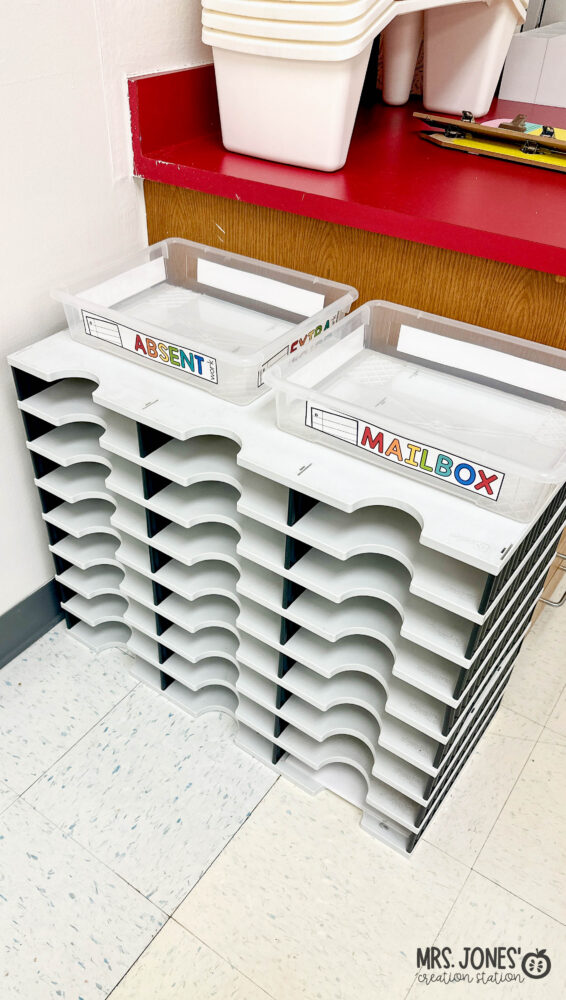
Start with a simple system, then adjust it throughout the year as you learn what works best for you and your learners.
Classroom Centers
One of my favorite classroom systems is keeping center materials separate from where the activities actually happen.
All of my literacy and math center tubs stay together in one location. Each tub matches the color of a table or center space, so learners know exactly where to take the activity.
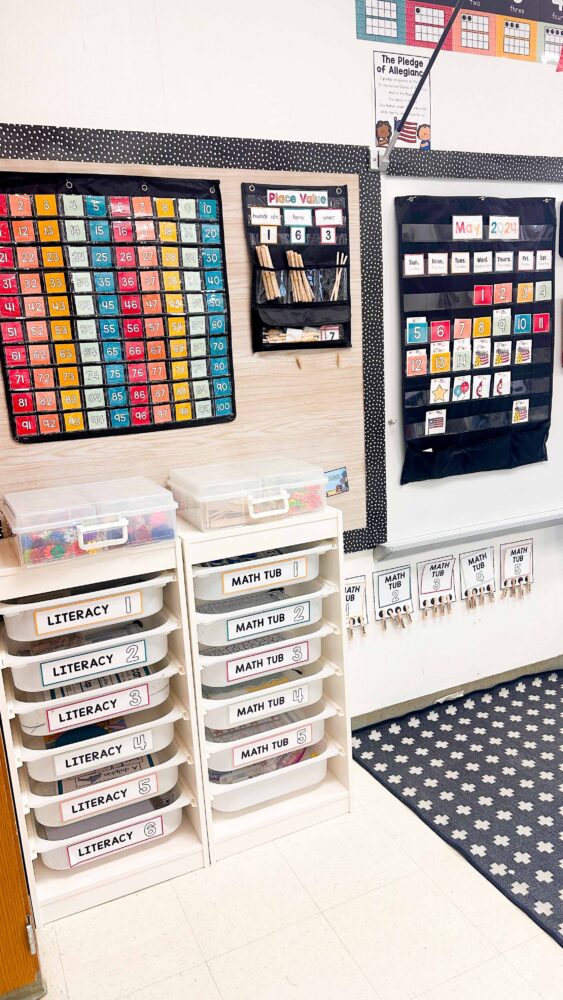
Before centers begin, we spend the first couple of weeks practicing every station together. We learn how to carry materials, work with a partner, clean up, and return everything to the correct spot.
Those few weeks of practice make independent centers much more successful for the rest of the year.
Looking for help planning your center locations? Download my FREE Classroom Layout Planner to map out your classroom before setup day.
Grab This Freebie
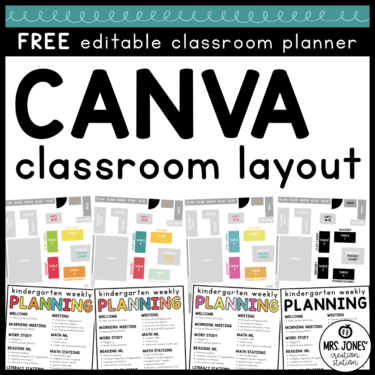
Editable Classroom Layout Planner | Free Canva Template
Login to DownloadClassroom Library
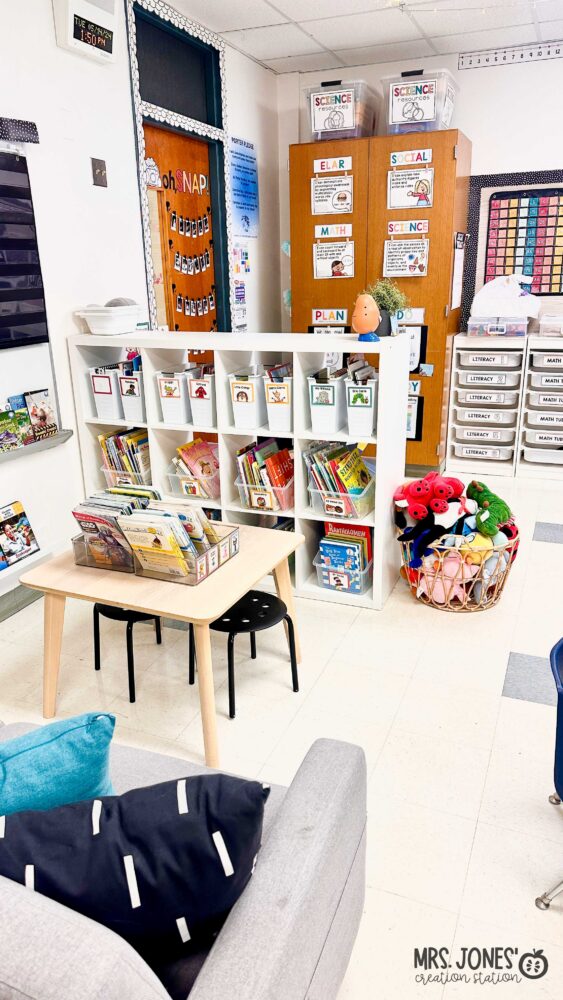
Decide early how your library will work.
Will books stay in the classroom library, or will learners keep books in individual book bins?
Neither option is right or wrong. Start with a system you can easily manage, then build on it as learners become more independent and responsible.
Simple systems are often the most successful.
Early Finisher Activities
Early finisher activities should continue learning, not encourage learners to rush through their work.
I kept books we had already read in each table cart so learners could revisit familiar stories. Drawing, writing, illustrating a story, practicing handwriting, or reading independently are all meaningful options that reinforce classroom learning.
Task cards are one of my favorite options because learners can simply grab a container and get started. They provide extra practice without feeling like “more work,” and they’re easy to differentiate throughout the year.
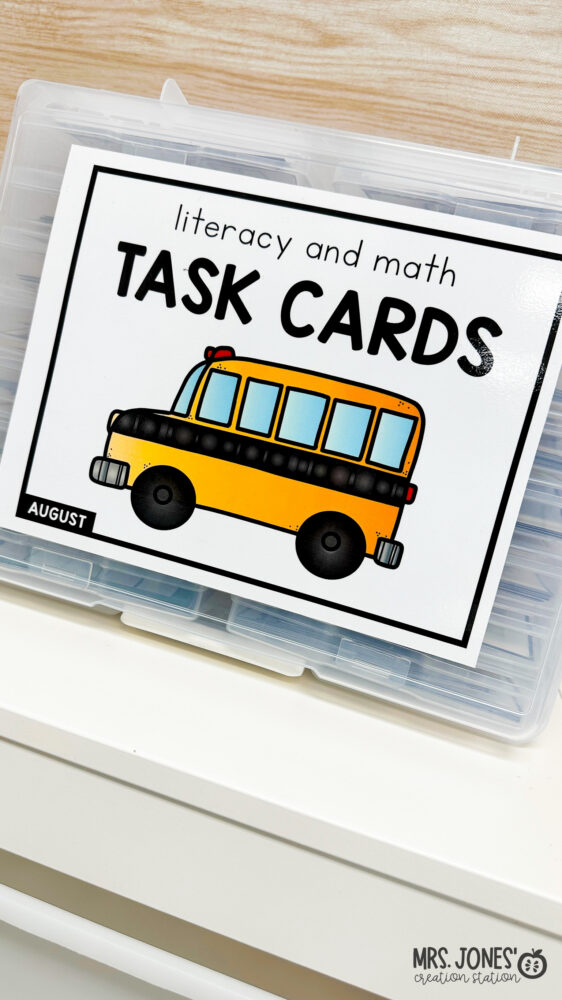

The goal isn’t to keep learners busy. The goal is to keep them learning while you continue working with small groups or individual learners.
Classroom Jobs
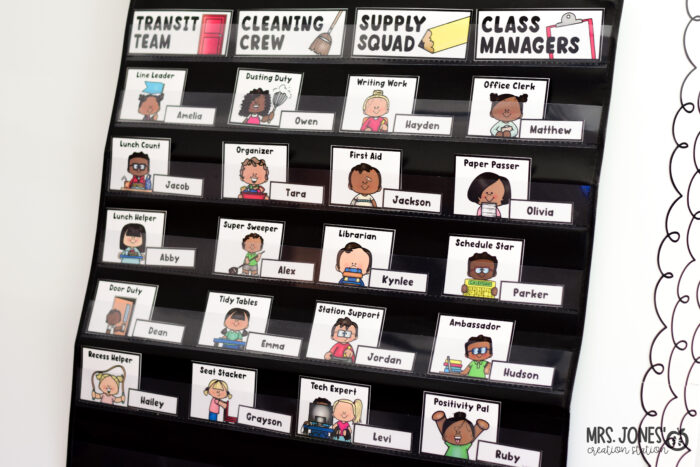
In kindergarten, I like keeping classroom jobs simple.
Instead of assigning several individual jobs, I use a Student of the Day. That learner becomes my helper by leading the line, passing out papers, filling mailboxes, and helping with other classroom tasks. They also get to choose a partner whenever we need buddies for an activity.
If you teach older learners, you can easily expand this system with additional classroom jobs throughout the room.

Visual Directions
One of the easiest systems to implement is using visual direction cards.
Instead of repeating directions several times, learners can reference the pictures and complete tasks independently. Visual reminders help establish routines, build confidence, and reduce interruptions throughout the day.
Be sure to grab my FREE Visual Direction Cards to help introduce classroom expectations from the very first week of school.

Visual Direction Cards
Make classroom routines easier with visual direction cards that help learners follow directions, complete tasks, and become more independent.
Simple Systems Create Successful Classrooms
You don’t need dozens of complicated organization hacks to have a well-managed classroom.
Start with a few simple systems that help learners become independent. Teach those routines, practice them often, and make adjustments as needed throughout the year.
When every learner knows where to find supplies, how to complete routines, and what to do next, your classroom becomes a place where everyone can focus on what matters most…learning.