


Managing literacy centers while teaching small reading groups can be one of the biggest challenges of the literacy block. You’re trying to provide meaningful practice, meet with learners at different reading levels, and keep everyone working independently.
And then come the questions.
“Where do I go next?”
“Who is my partner?”
“What am I supposed to be doing?”
A consistent literacy rotation system helps answer those questions before learners even need to ask.
In my classroom, I used color-coded reading groups, literacy partners, and individual rotation schedules to organize our literacy block. Once learners understood the routine, they could move between activities more independently while I focused on small-group reading instruction.
Here’s how I organized the system and how you can set up something similar in your classroom.

Start by Organizing Your Reading Groups
Before planning literacy centers, I begin with my reading groups.
Using current reading assessments and classroom observations, I group learners with similar instructional needs. This allows me to provide more targeted instruction during guided reading and small-group lessons.
My Literacy Rotation System uses six color-coded reading groups: red, yellow, teal, orange, blue, and green.
These colors make it easy to identify groups on my planning sheet without constantly searching through student names.
The goal isn’t to keep learners in the same group all year. As their reading skills develop, I adjust groups to reflect their current instructional needs.
I use the included teacher planning template to keep my reading groups, literacy partners, and weekly rotations organized in one place.

Create Literacy Partners Across Reading Groups
Here’s where the system becomes a little different from a traditional reading group rotation chart.
While I want learners working with others who have similar instructional needs during guided reading, I don’t necessarily want them working with those same learners during every literacy activity.
Instead, I create literacy partners from different reading groups.
For example, a learner from the red group partners with a learner from the yellow group. Together, they become RY1. Another red and yellow partnership becomes RY2.
The system uses three color combinations:
- RY: Red and Yellow
- TO: Teal and Orange
- BG: Blue and Green
This approach allows me to keep reading instruction differentiated while giving learners opportunities to work with different classmates during partner activities.
Each partnership receives a corresponding weekly rotation schedule, so both learners know where to go and what to complete.


Plan Three Daily Literacy Rotations
Once reading groups and partners are organized, it’s time to plan the literacy block.
My system includes three daily rotations, Monday through Thursday. Each rotation has a different purpose, but the structure stays consistent throughout the week.
Guided Reading and Book Club
This rotation focuses on reading instruction and meaningful reading experiences.
During Guided Group, learners meet with me for targeted reading instruction based on their needs. Meanwhile, other learners participate in their assigned Book Club activity.
The schedules alternate these experiences throughout the week, allowing me to meet with reading groups while other learners stay engaged in familiar routines.
Reading Stations
Reading stations give learners opportunities to apply reading skills independently or with a partner.
The four stations include Read to Self, Buddy Read, Book Response, and Reading Skills.
I like offering different ways to interact with books. Sometimes learners need quiet time to read independently. Other times, they benefit from reading with a partner, responding to a story, or practicing a specific reading skill.
These stations rotate throughout the week, giving learners a variety of meaningful reading experiences.
Literacy Centers and Word Work
The third rotation focuses on foundational literacy skills through hands-on practice.
Learners rotate through phonics, writing, sight words, and spelling activities.
I choose activities that reinforce skills we’ve already introduced during whole-group or small-group instruction. That way, learners can practice more independently instead of needing me to explain a brand-new concept.
The activities may change each week, but the station routines remain familiar.
Grab This Freebie

LITERACY CENTER LABELS
Login to DownloadOrganize Your Literacy Stations Around the Classroom
Once the schedules are ready, I organize the physical stations.
I prefer keeping literacy activities in one central location and having learners complete them at designated areas around the classroom.
For example, literacy tubs can stay together on a shelf while the corresponding stations take place at tables, the carpet, or other workspaces.
Clear station labels help learners identify where each activity belongs.
The most important thing is creating a predictable routine. Learners should know where to find their materials, where to work, and how to return everything when they’re finished.
I also think carefully about which activities need quiet spaces and which allow for more conversation. Reading independently beside a busy partner station isn’t always the best arrangement!

Give Every Learner an Individual Rotation Schedule
One of my favorite parts of this system is that learners don’t have to rely on a large classroom chart to figure out where they belong.
Instead, each learner has an individual Monday through Thursday literacy rotation schedule.
I place the schedule on their student binder or folder so they can quickly check where to go during each rotation.
Before transitioning, learners simply look at their schedule, find the correct station, and move to their assigned location.
This visual support is especially helpful for young learners who are still developing independence and classroom responsibility.
It also means fewer interruptions while I’m working with a reading group.

Teach Literacy Center Procedures Before Expecting Independence
Even the best literacy rotation system won’t work if learners don’t understand the expectations.
During the first couple of weeks, I spend time introducing stations and practicing procedures before expecting learners to manage the rotations independently.
We practice finding the correct tub, carrying materials to the assigned location, completing the activity, cleaning up, and transitioning to the next rotation.
Sometimes we gather as a class and complete an activity together while discussing what it should look and sound like during literacy centers.
I also model what learners should do when they finish early, need help, or discover missing materials.
It takes time initially, but teaching these routines helps protect instructional time later.
Keep Your Literacy Rotation System Flexible
Reading groups change throughout the school year, and your literacy rotation system should be able to change with them.
When assessments show that a learner needs different instruction, I can reorganize the reading groups and partnerships.
Then I redistribute the corresponding rotation schedules.
I don’t have to redesign the entire literacy block or start over with new procedures.
The structure stays familiar while the groups and activities change to meet learners’ needs.
That’s what makes a consistent system so helpful. Learners know what to expect, and I can focus on instruction rather than constantly managing transitions.
Get the Literacy Rotation System
If you’re ready to organize your reading groups and literacy centers, my Literacy Rotation System includes the tools I use to manage this routine.
You’ll find a teacher planning template, individual learner rotation schedules, and visual labels for guided reading, book clubs, reading stations, and literacy centers.
The system provides the organization and schedules. You can fill the stations with literacy activities you already have or pair it with coordinating resources.
Shop This Post

Need Literacy Station Activities Too?
Once your rotation system is organized, the next step is choosing meaningful activities for each station.
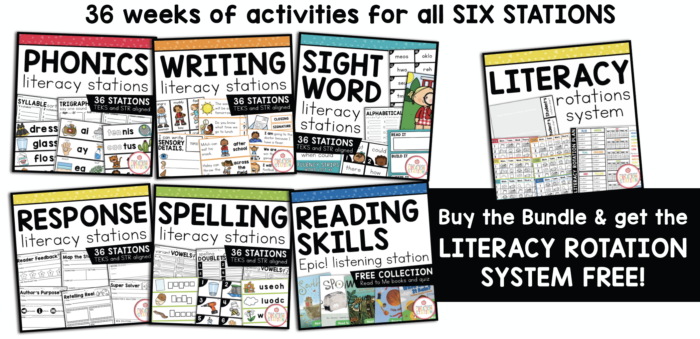
My Year-Long Second Grade Literacy Stations Bundle includes more than 200 stations covering phonics, spelling, sight words, writing, reading response, and reading skills.
These activities coordinate with the station categories in the rotation system, making it easier to keep learners practicing important literacy skills throughout the school year.
Even better, the Literacy Rotation System is included as a bonus in the complete bundle.
If you already have plenty of literacy activities, you may only need the management system. However, if you’re looking for both the organization tools and a full year of station activities, the bundle brings everything together.
Make Your Literacy Block Work for You
A successful literacy block doesn’t mean every minute goes perfectly or that learners never need help.
It means creating routines that allow learners to become more independent while you provide the instruction they need.
Start with clear reading groups, organize your partnerships, introduce the stations gradually, and give learners visual schedules they can follow.
Once those routines are established, you can spend less time answering questions about where to go next and more time helping learners grow as readers.
Shop This Post
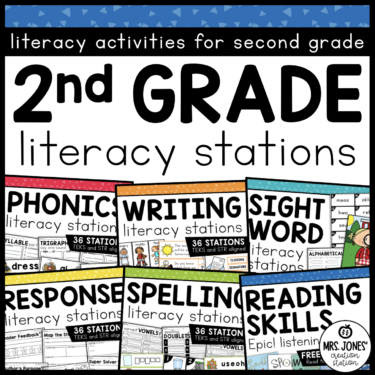
Second Grade Literacy Centers Bundle | 180 Reading, Phonics, Spelling & Writing Stations
Original price was: $195.50.$150.00Current price is: $150.00.
Shop MJCS


