

Make alphabet and phonics practice interactive during whole-group instruction
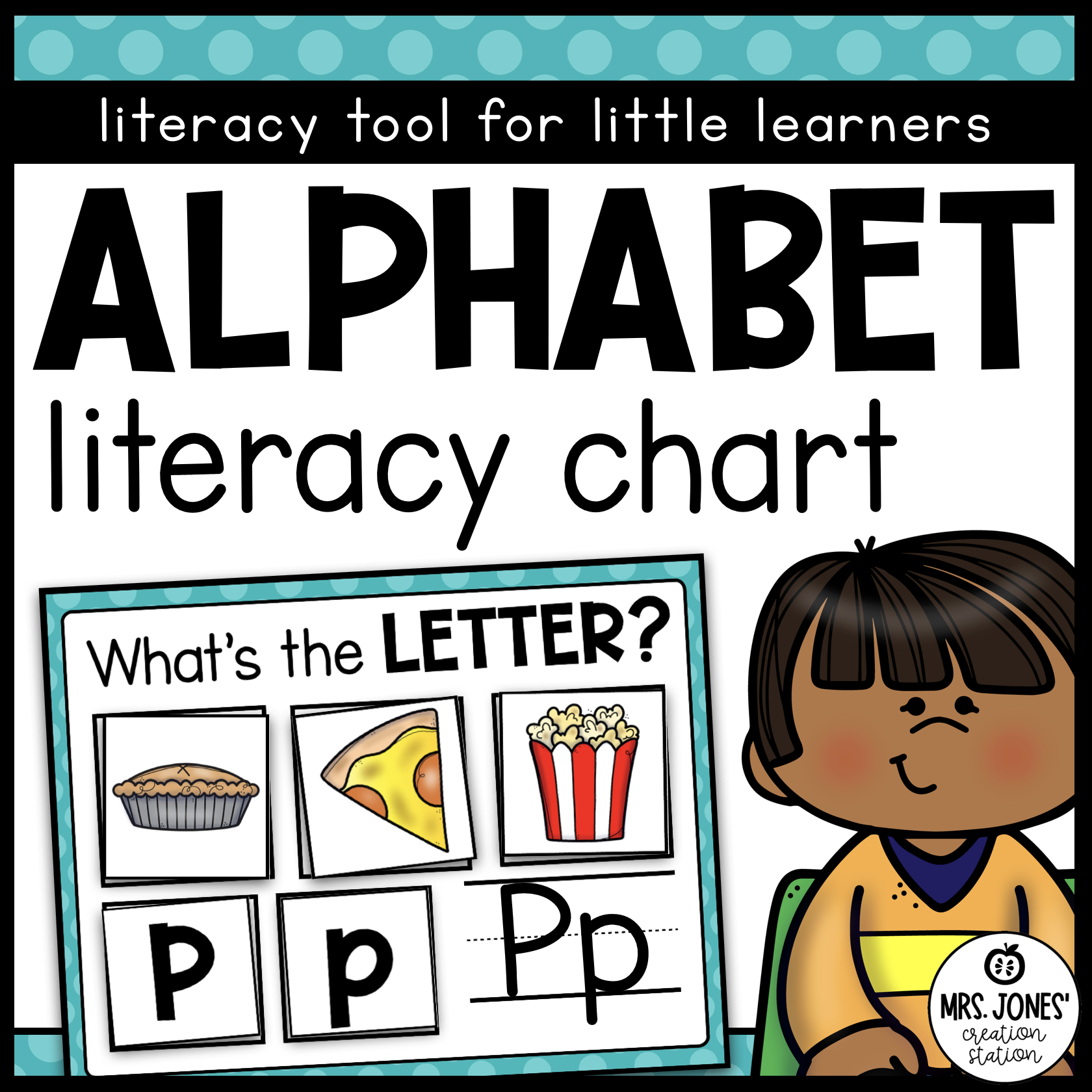
This Alphabet Literacy Chart gives you an interactive way to practice letter recognition, beginning sounds, and phonics during morning meeting, circle time, whole-group lessons, small groups, or intervention.
Start by modeling the activity for your students. Then, invite the class to work together to complete the “What’s the Letter?” chart. Students identify picture sounds, choose the matching uppercase and lowercase letters, and practice writing the letter.
As a result, alphabet review becomes something students actively participate in instead of simply watching from the carpet.
The activity begins with uppercase and lowercase alphabet recognition and initial sounds. Then, you can extend the same familiar routine into consonant digraphs and vowel teams as students develop stronger phonics skills.
Plus, the chart works especially well as a quick academic component of your morning meeting. Keep it displayed, change the cards to match your current skill, and use it for a focused literacy review before moving into the rest of your day.
WHAT’S INCLUDED
“What’s the Letter?” Interactive Literacy Chart
The reusable literacy chart provides spaces for:
- 3 picture cards
- Uppercase letter
- Lowercase letter
- Letter-writing practice
Students work together to study the pictures, identify the shared sound, choose the corresponding letters, and write the letter.
Alphabet Picture Cards
Colorful picture cards provide multiple visual examples for letter-sound practice.
For example, the A and B cards include pictures such as an apple, axe, astronaut, banana, baseball, and bear. The remaining pages continue this picture-supported format throughout the alphabet.
Use the pictures to encourage students to say each word aloud, listen for the sound, and explain which letter matches.
Uppercase & Lowercase Letter Cards
Uppercase and lowercase cards allow students to:
- Identify capital letters
- Identify lowercase letters
- Match uppercase and lowercase letters
- Connect letters with sounds
- Connect pictures with letters
- Practice alphabet recognition
Consonant Digraph & Phonics Cards
The resource does not stop with individual letters.
Additional picture and phonics cards provide practice with patterns including:
ck • ch • kn • ph • sh • th • wh
This makes it easy to continue using the familiar literacy chart format as students move into more advanced phonics instruction.
Vowel Team Cards
Additional cards provide practice with common vowel patterns, including:
ay • ai • ee • ea • ie • igh • oa • oe • ue • ui • aw • au • oy • oi • ow • ou
Students study the pictures and connect the sounds they hear with the corresponding spelling patterns.
SKILLS COVERED
- Uppercase letter recognition
- Lowercase letter recognition
- Uppercase and lowercase matching
- Letter identification
- Letter-sound correspondence
- Initial sounds
- Phonemic awareness
- Letter formation
- Handwriting practice
- Picture-to-sound connections
- Consonant digraphs
- Vowel teams
- Common phonics patterns
- Vocabulary development
- Early decoding skills
HOW TO USE
Morning Meeting or Circle Time
First, display the literacy chart where the entire class can see it.
Next, place three picture cards on the chart. Say the picture names together and have students listen for the sound they share.
Then, invite students to identify and place the matching uppercase and lowercase letters.
Finally, choose a student volunteer to write the letter on the chart.
This makes a quick literacy review easy to incorporate into your morning meeting routine.
Whole-Group Phonics Instruction
Use the chart as part of your whole-group alphabet or phonics lesson.
Model your thinking as you name the pictures, isolate the sound, and connect that sound with the correct letter or spelling pattern.
After students understand the routine, turn more of the thinking over to them. Invite students to explain their answers and come to the chart to add cards or write the letter.
Small Groups & Intervention
The predictable format also makes this resource useful for targeted instruction.
Choose cards that match the skill your students need to practice. You can focus on one letter, compare easily confused letters, review initial sounds, or move into selected digraphs and vowel teams.
Because students already understand the routine, more instructional time can be spent on the actual literacy skill.
WHY TEACHERS LOVE IT
- Makes morning meeting academically meaningful
- Encourages whole-class participation
- Turns alphabet review into an interactive routine
- Works well for whole-group phonics instruction
- Provides targeted practice for intervention
- Includes uppercase and lowercase letters
- Uses colorful pictures to support sound recognition
- Includes built-in letter-writing practice
- Extends beyond the alphabet into phonics
- Includes consonant digraph and vowel team practice
- Uses one familiar routine for multiple skills
- Easy to adjust as students progress
START WITH LETTERS, THEN GROW INTO PHONICS
One of the biggest benefits of this literacy chart is that the routine can stay consistent while the instructional skill changes.
At the beginning of the year, focus on letter recognition, uppercase and lowercase matching, initial sounds, and letter formation.
Once students are ready, introduce consonant digraphs and other phonics patterns.
Later, use the vowel team cards to continue building sound-spelling connections.
Therefore, students already know what to do when you introduce a new skill. You can spend less time explaining an activity and more time actually teaching phonics.
PERFECT FOR
- Morning Meeting
- Circle Time
- Whole-Group Literacy
- Whole-Group Phonics
- Alphabet Review
- Daily Literacy Review
- Small-Group Instruction
- Reading Intervention
- Phonics Intervention
- Preschool
- Pre-K
- Kindergarten
- First Grade Phonics Review
- Homeschool Instruction
SAVE WITH THE LITERACY MORNING MEETING CHARTS BUNDLE
Love using interactive literacy charts for whole-group instruction?
This Alphabet Literacy Chart is included in the Literacy Morning Meeting Charts Bundle, which gives you additional interactive charts for practicing early literacy skills throughout the school year.
Use the charts during morning meeting, whole-group literacy instruction, small groups, or intervention to create a consistent routine students already understand. Simply change the chart and skill as your instruction progresses.
WANT TO SEE IT IN ACTION?
Want to see how literacy charts can fit into your classroom routine?
I use literacy charts to bring quick, interactive academic practice into morning meeting. Students can participate in the lesson, discuss their thinking, and help complete the chart together.


Reviews
There are no reviews yet.