

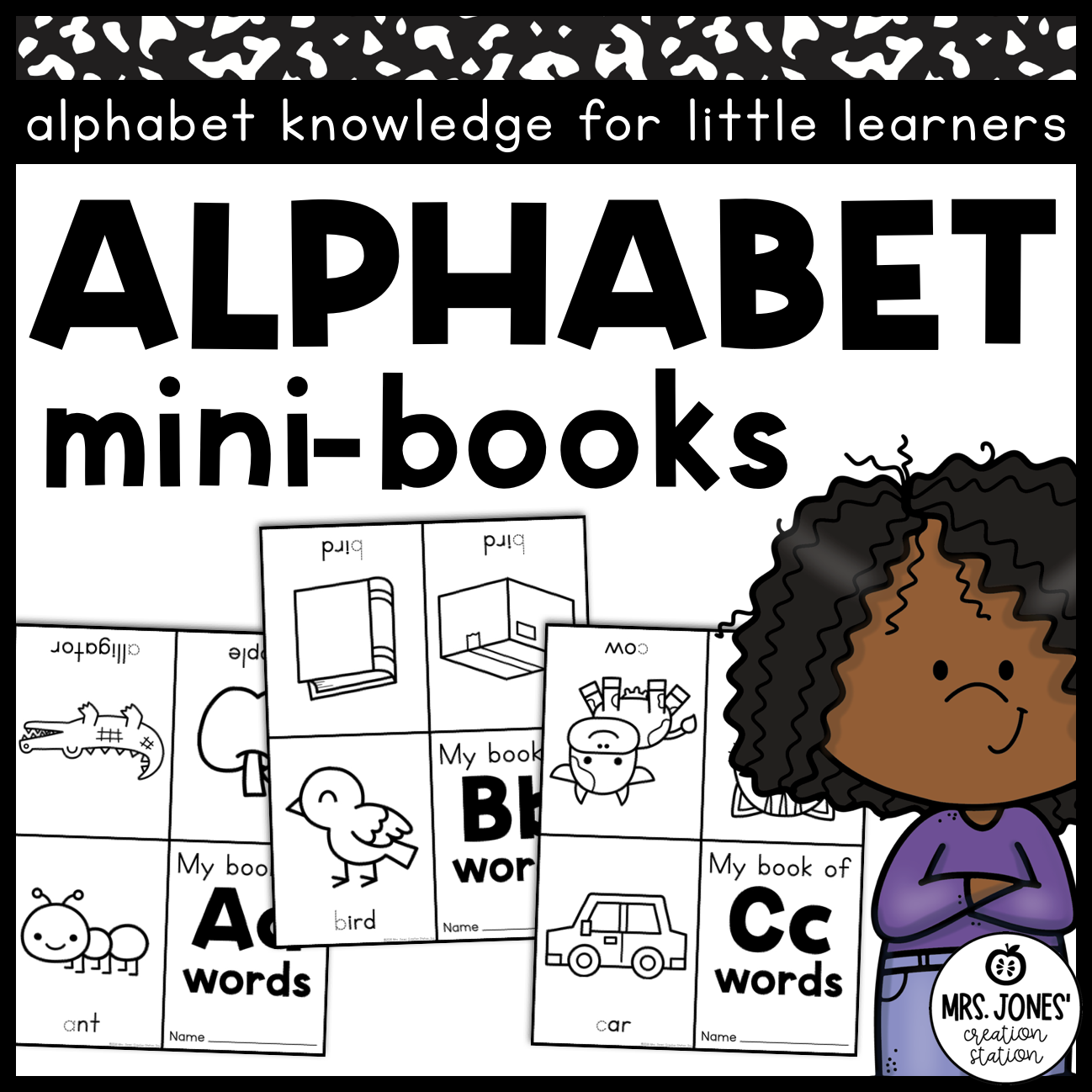
Build Letter Recognition and Beginning Sounds with Interactive Mini Books
Give young learners hands-on alphabet practice with these Alphabet Mini Books for Preschool, Pre-K, and Kindergarten.
Students create a mini book for each letter while practicing uppercase and lowercase letter recognition, beginning sounds, picture vocabulary, and early phonics skills. The simple format gives children focused practice with one letter at a time.
As students complete each alphabet mini book, they interact with the target letter and beginning-sound pictures. Then, instead of tossing the activity aside when they finish, students have a little book they can reread for additional alphabet practice.
Use the mini books as you introduce each letter during Letter of the Week, or add them to literacy centers, small groups, morning work, and independent alphabet practice.
WHAT’S INCLUDED
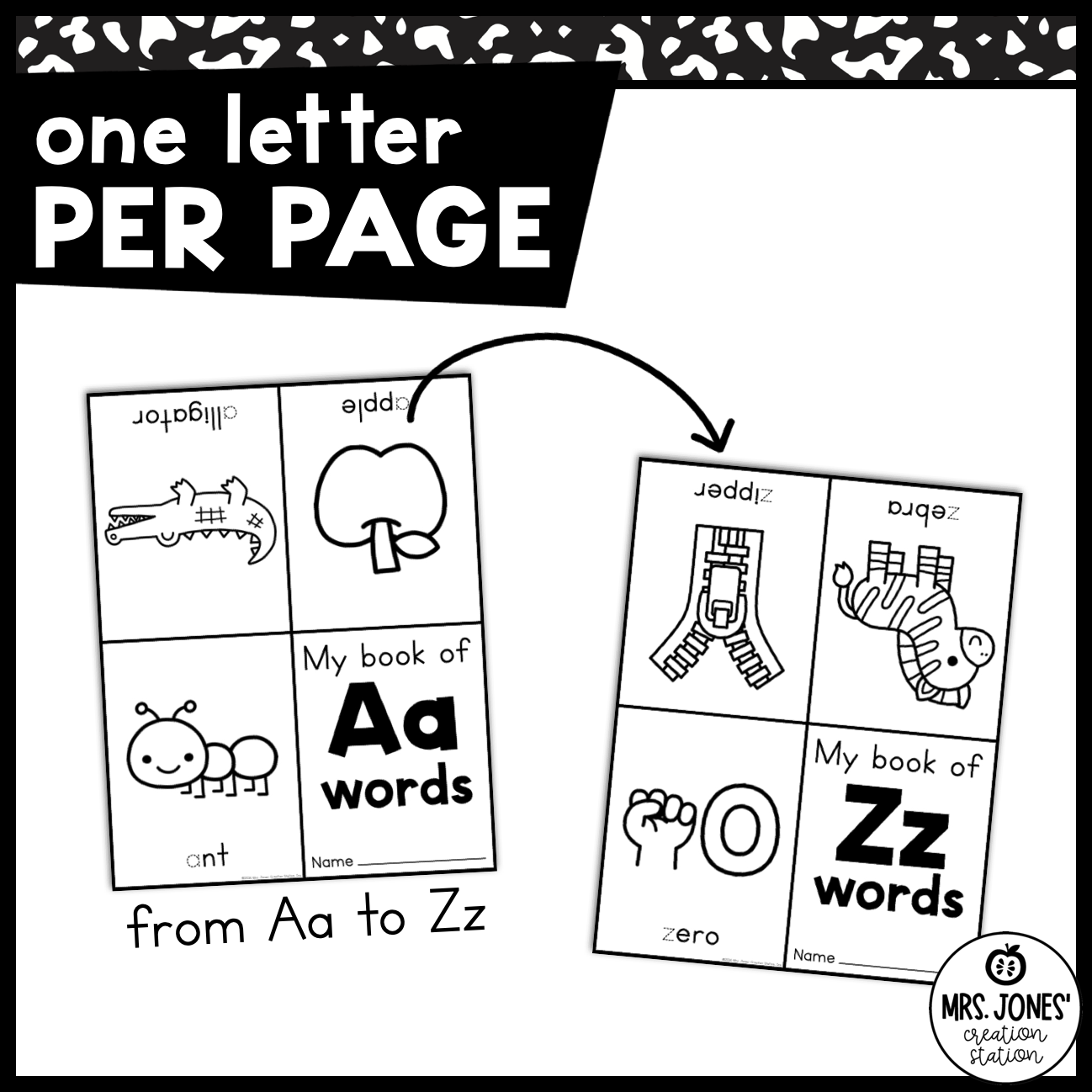
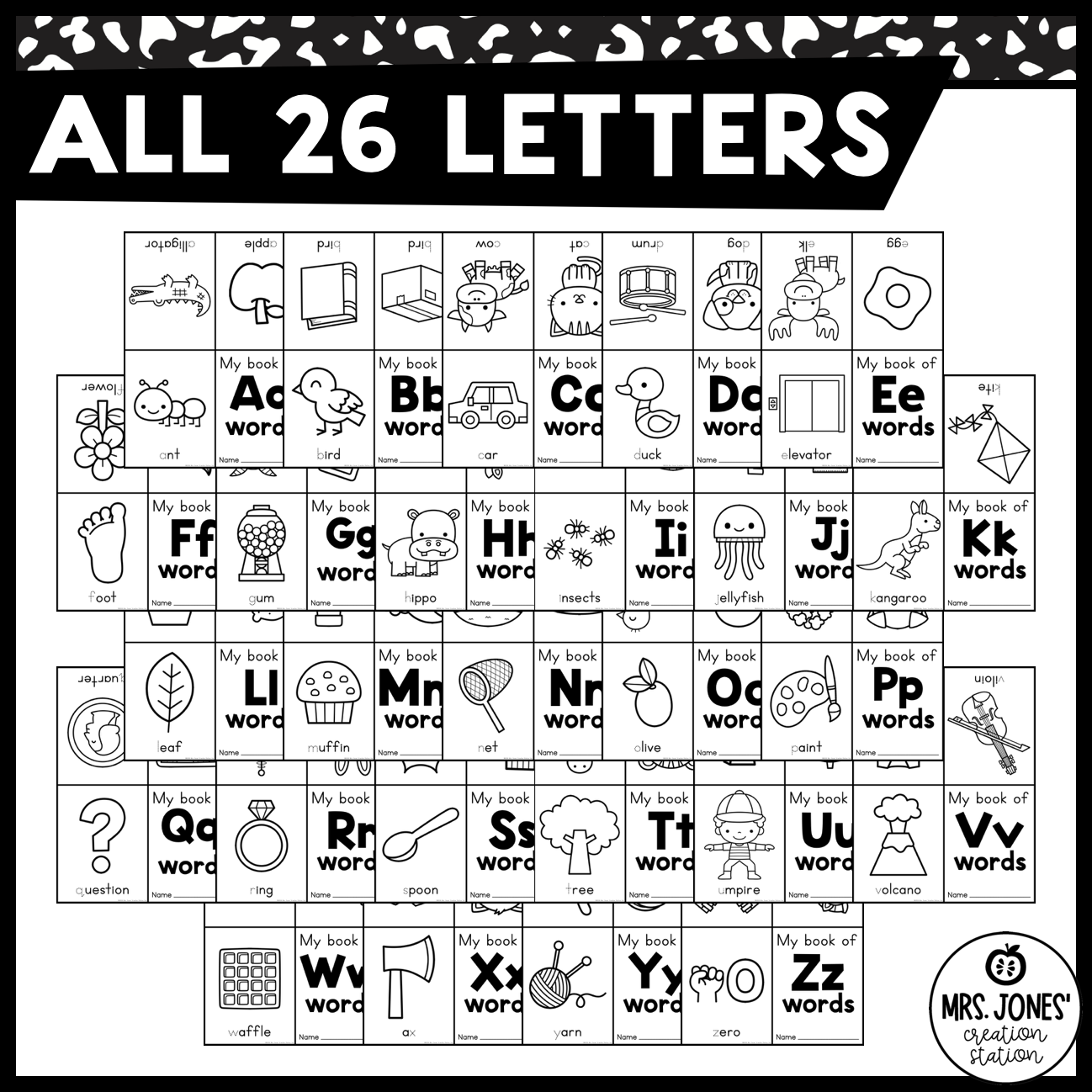
ALPHABET MINI BOOKS FOR ALL 26 LETTERS
Students create a printable mini book for every letter of the alphabet.
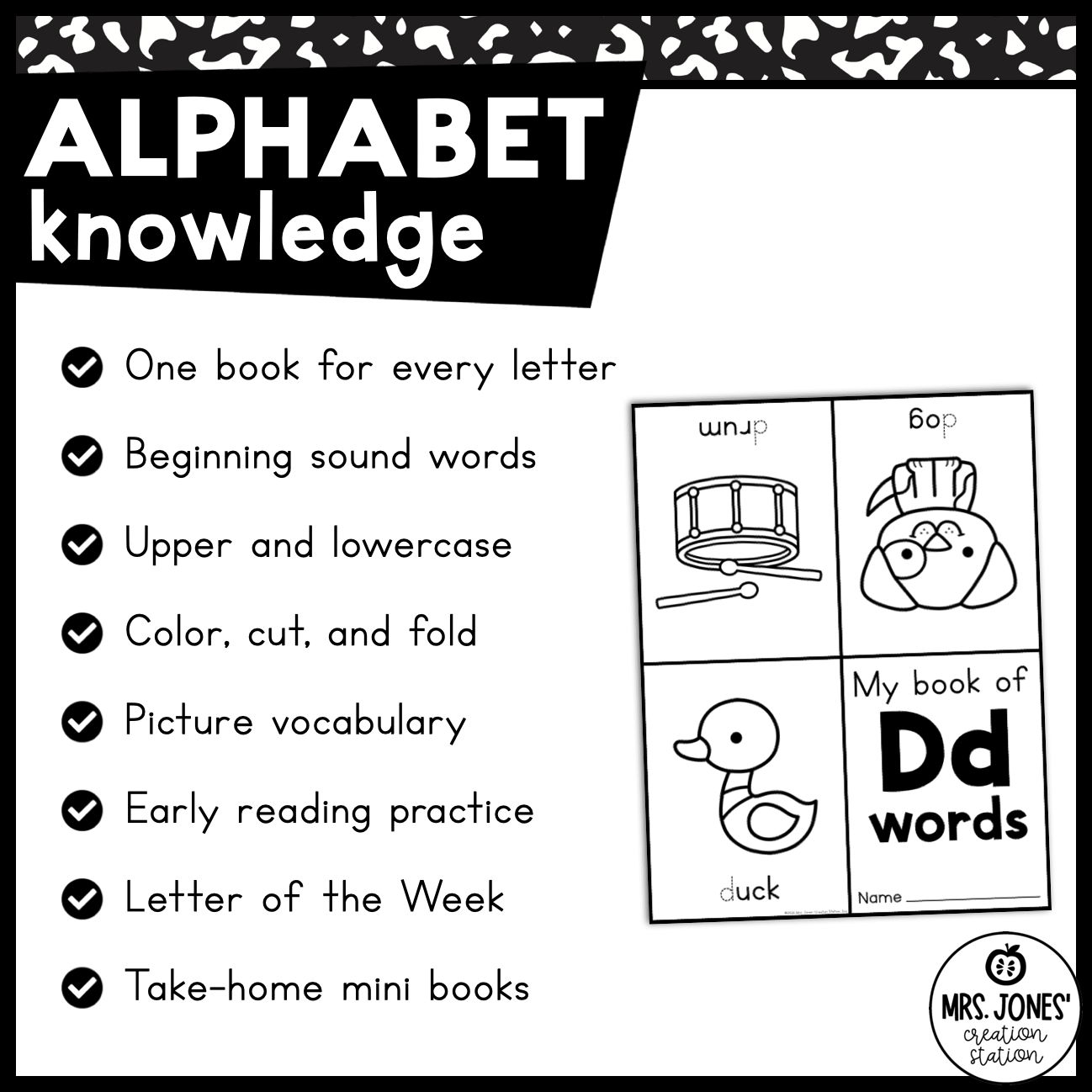
Each mini book provides practice with:
- Uppercase letters
- Lowercase letters
- Letter recognition
- Beginning sounds
- Letter-sound connections
- Picture vocabulary
- Early phonics skills
- Coloring and fine motor practice
- Early reading
Focusing on one letter at a time gives beginning learners repeated exposure without overwhelming them with too many alphabet skills at once.
BEGINNING SOUND PICTURE PRACTICE
Pictures throughout the mini books help students connect each focus letter with familiar words.
As children name the pictures, emphasize the beginning sound. This helps students make the connection between the letter they see, the sound they hear, and the word represented by the picture.
STUDENT-MADE ALPHABET BOOKS
Once each mini book is assembled, students have their own little alphabet reader to revisit.
Keep completed books in book boxes, literacy folders, or take-home bags for repeated practice. Over time, students can build a collection covering all 26 letters.
SKILLS COVERED
- Uppercase letter recognition
- Lowercase letter recognition
- Letter identification
- Beginning sounds
- Letter-sound correspondence
- Alphabet knowledge
- Early phonics
- Picture vocabulary
- Early reading
- Fine motor development
- Independent literacy practice
HOW TO USE
First, choose the mini book that matches the letter you are teaching.
Introduce the uppercase and lowercase forms of the letter. Then, practice saying the target sound together.
Next, complete the mini book with students. Talk about the pictures and say each word aloud, emphasizing the beginning sound.
After the book is assembled, have students reread it during independent literacy time.
Use these Alphabet Mini Books for:
- Letter of the Week
- Alphabet instruction
- Literacy centers
- Small groups
- Morning work
- Phonics practice
- Alphabet review
- Independent reading
- Intervention
- Take-home practice
Students can also keep their completed books together so they have a growing collection of alphabet readers to revisit throughout the year.
WHY TEACHERS LOVE IT
- Includes a mini book for every letter
- Practices uppercase and lowercase letter recognition
- Reinforces beginning sounds
- Connects letters, sounds, words, and pictures
- Gives students something they can reread after completing the activity
- Builds alphabet vocabulary
- Fits naturally into Letter of the Week instruction
- Works for small groups and independent literacy practice
- Adds coloring and fine motor practice
- Creates a collection students can use for ongoing alphabet review
SAVE WITH THE ALPHABET ACTIVITIES BUNDLE
Love these Alphabet Mini Books? They are also included in the Alphabet Activities Bundle!
The complete bundle gives young learners a variety of ways to practice letter recognition, beginning sounds, handwriting, phonics, and foundational alphabet skills.
Along with the Alphabet Mini Books, students can practice with alphabet centers, puzzles, flipbooks, handwriting activities, letter hats, poems, sorting activities, crafts, posters, and more.
Use the bundle throughout your alphabet study for Letter of the Week, literacy centers, small groups, intervention, phonics, handwriting, and independent practice.


Reviews
There are no reviews yet.