

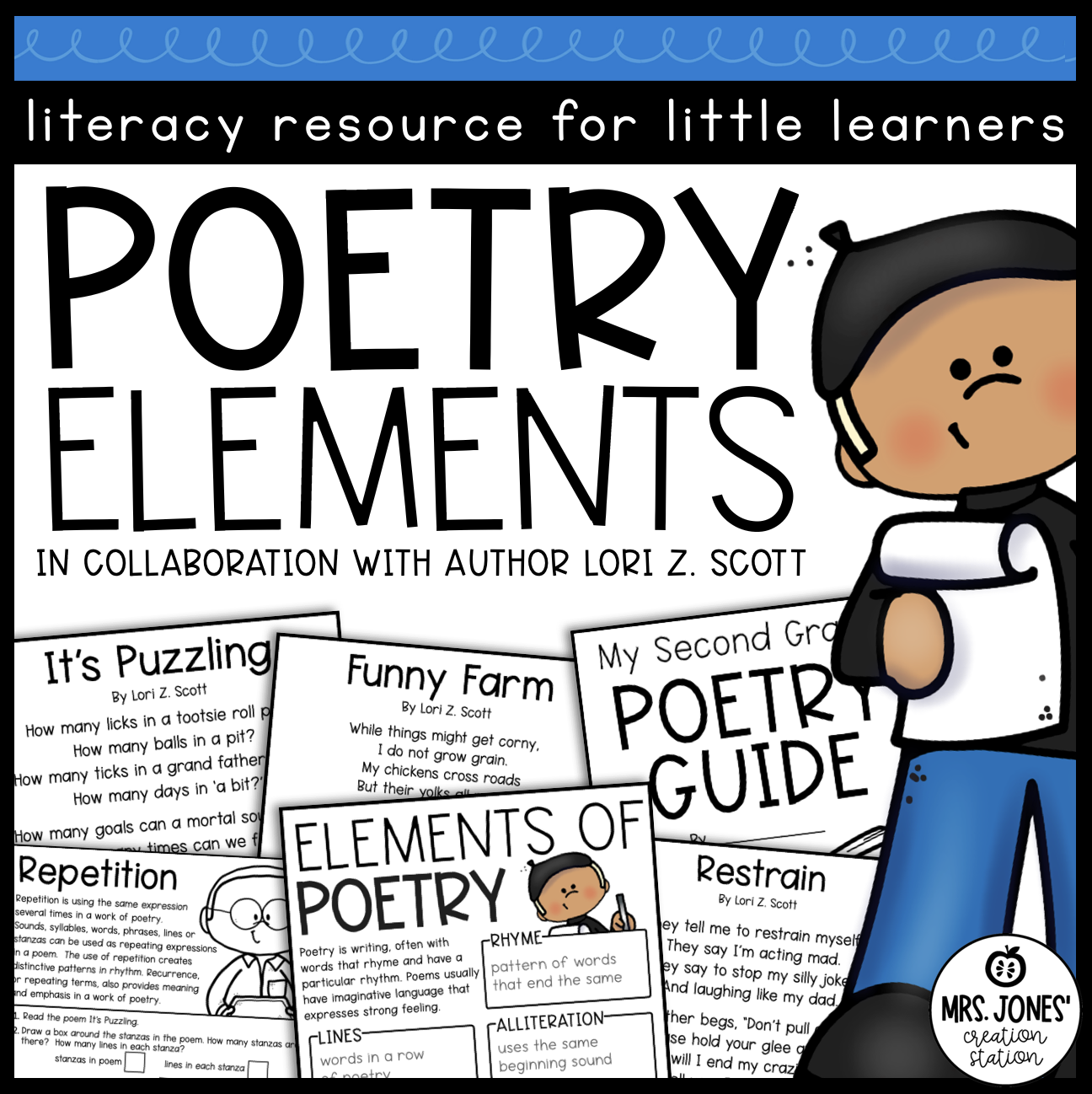
Teach poetry elements through reading, analyzing, and writing poems
Help students move beyond simply reading poems with these Poetry Elements Activities for Second Grade. This resource gives students explicit instruction, original poems to study, and opportunities to apply each poetry concept through both analysis and writing.
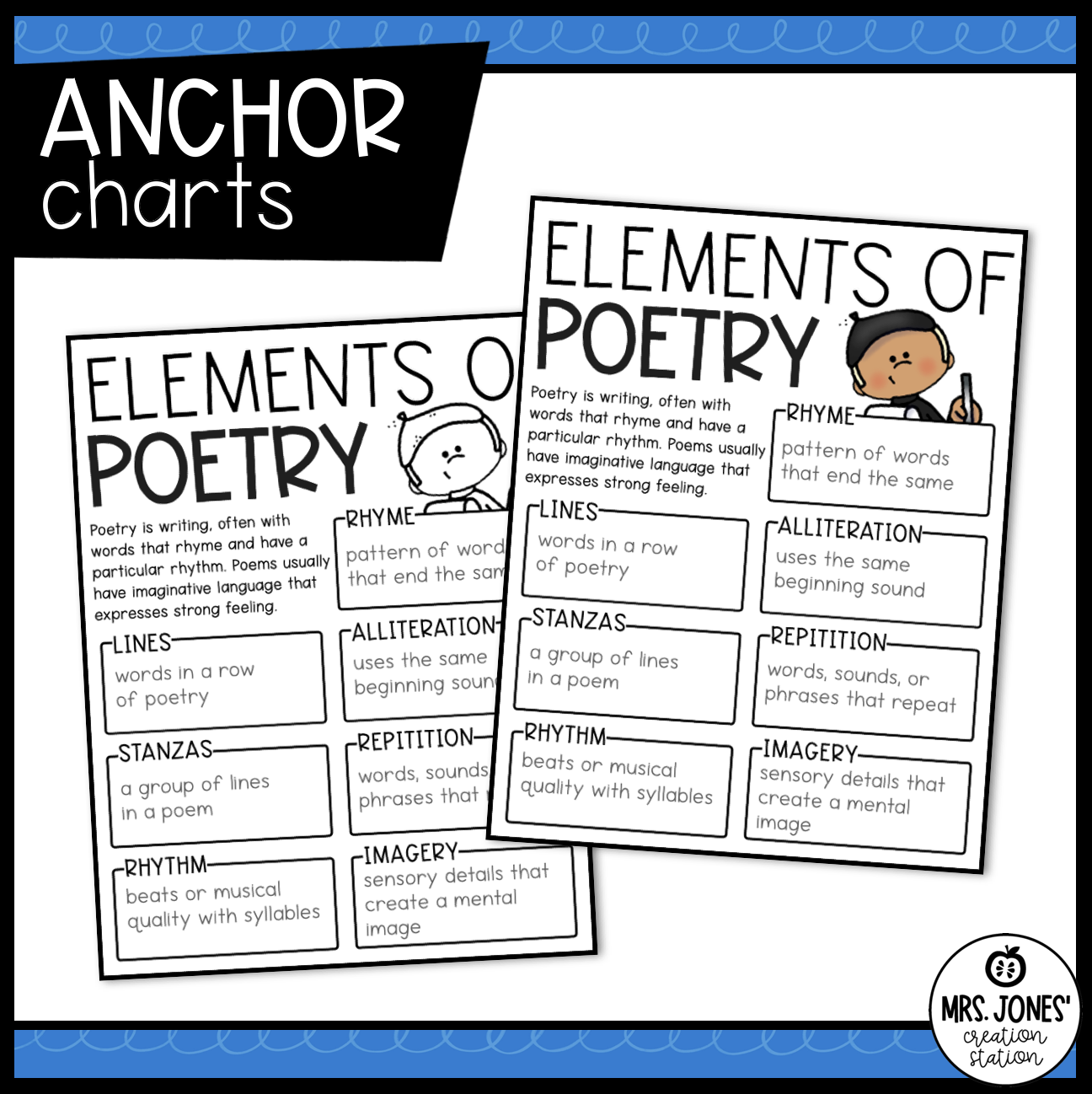
Students begin with an Elements of Poetry reference chart that introduces lines, stanzas, rhythm, rhyme, alliteration, repetition, and imagery. Next, they work through focused poetry lessons using original poems by author Lori Z. Scott. As students progress, they identify poetry elements, analyze how poets use them, and apply the techniques to their own writing.
Plus, the lessons build on one another. Students revisit previously taught skills while learning new concepts such as rhyme scheme and internal rhyme. This gives students repeated practice instead of treating each poetry term as an isolated vocabulary word.
Finally, students can use the included Poetry Planner to create their own poems and intentionally incorporate the elements they have learned.
WHAT’S INCLUDED
Elements of Poetry Anchor Charts
Introduce important poetry vocabulary with the included Elements of Poetry anchor chart.
Students learn about:
- Lines
- Stanzas
- Rhythm
- Rhyme
- Alliteration
- Repetition
- Imagery
Both color and black-and-white versions are included.
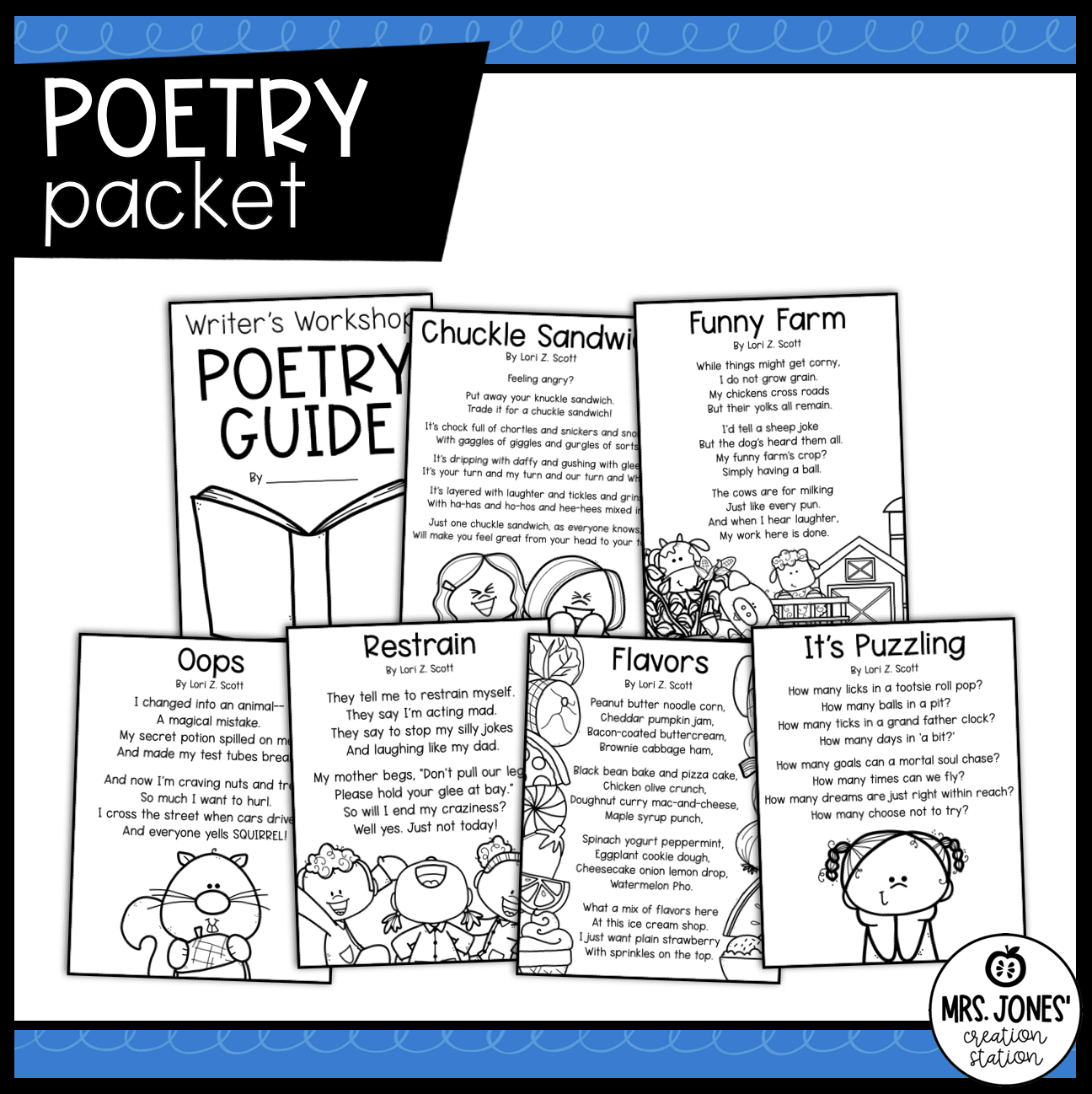
Student Poetry Guide
Students can collect the included poems in their own poetry guide.
Two cover options are included:
My Second Grade Poetry Guide
and
Writer’s Workshop Poetry Guide
Use the completed guide as a reference during your poetry unit, reading lessons, or Writer’s Workshop.
Original Poems by Lori Z. Scott
The resource includes original poems students use throughout the lessons, including:
- Chuckle Sandwich
- Funny Farm
- Oops
- Restrain
- Flavors
- It’s Puzzling
- Build
- Question
These poems give students authentic text to analyze while learning how poetry works.
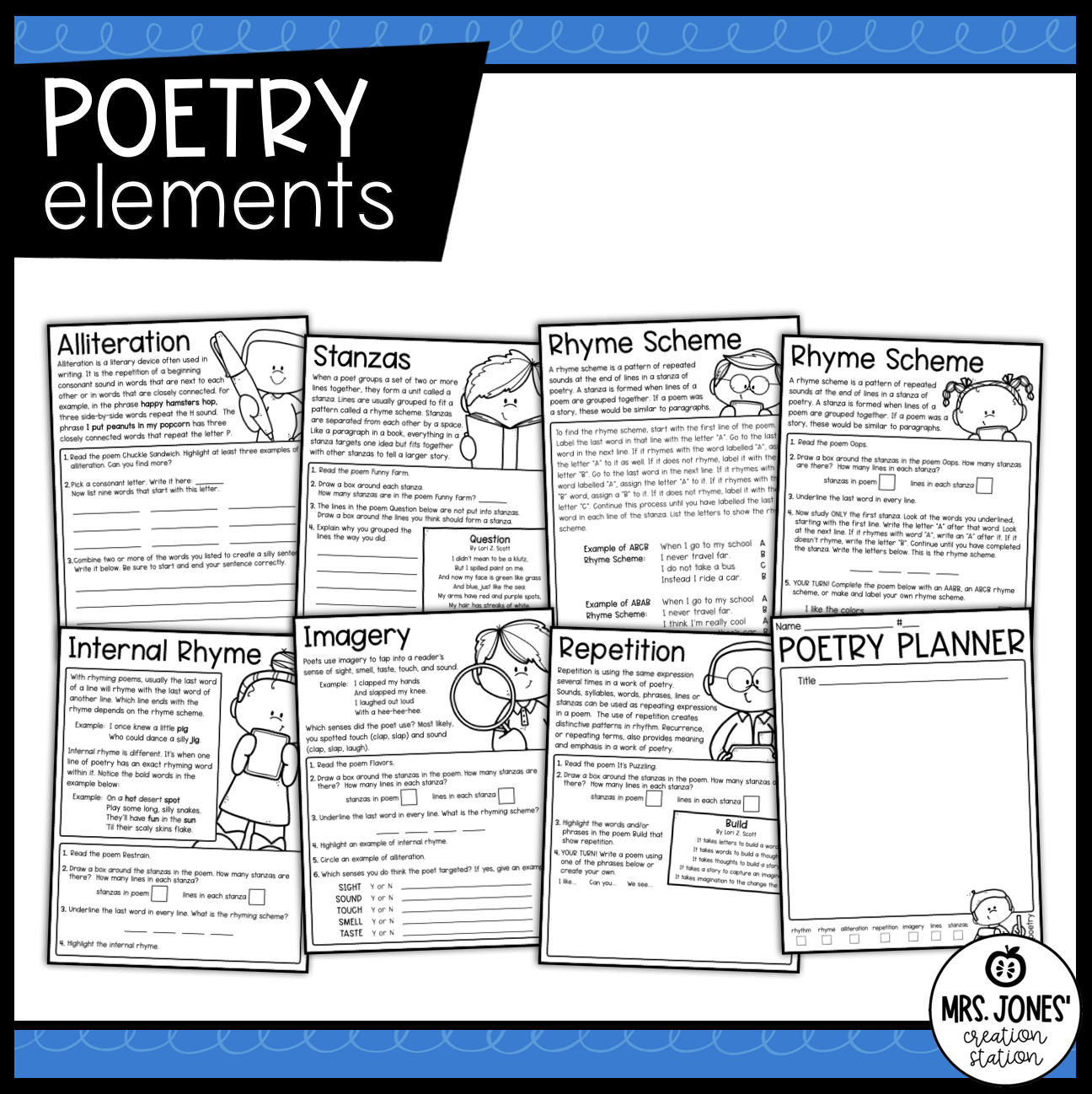
POETRY ELEMENTS & ACTIVITIES
Alliteration
Students learn that alliteration uses repeated beginning consonant sounds.
After reading Chuckle Sandwich, students identify examples of alliteration in the poem.
Then, they choose a consonant, brainstorm nine words beginning with that sound, and combine their words to create a silly alliterative sentence.
Stanzas
Students learn how poets group lines together to create stanzas.
Using Funny Farm, students identify and count stanzas. Then, they decide how the lines of another poem should be grouped and explain their reasoning.
The lesson also brings back alliteration for additional review.
Rhyme Scheme
Students learn how to identify patterns of end rhyme using letters.
The instructional page walks students through the process of labeling rhyme schemes and provides examples of ABCB and ABAB patterns.
Next, students analyze the poem Oops by identifying stanzas, examining end words, and determining its rhyme scheme.
Finally, students complete their own short poem using an AABB, ABCB, or self-created rhyme scheme.
Internal Rhyme
Students compare end rhyme with internal rhyme, learning how rhyming words can also appear within a single line of poetry.
Using Restrain, students identify stanzas, determine rhyme scheme, and locate internal rhyme.
As a result, students continue practicing previously taught concepts while adding another poetry technique.
Imagery
Students learn how poets use imagery to connect with the reader’s senses of:
- Sight
- Sound
- Touch
- Smell
- Taste
After reading Flavors, students analyze the poem for stanzas, rhyme scheme, internal rhyme, alliteration, and sensory imagery.
For example, students identify which senses the poet targets and provide evidence from the poem.
Repetition
Students explore how poets repeat sounds, syllables, words, phrases, lines, or stanzas to create patterns, meaning, and emphasis.
Students identify repetition in the poem Build. Then, they apply the technique by writing their own poem using a repeated phrase such as “I like…,” “Can you…,” or “We see….”
Poetry Planner
After studying the poetry elements, students can put everything together with the included Poetry Planner.
Students have space to write their own poem and can track whether they incorporated:
rhythm • rhyme • alliteration • repetition • imagery • lines • stanzas
Two Poetry Planner formats are included.
SKILLS COVERED
- Poetry elements
- Poetry vocabulary
- Poetry analysis
- Poetry writing
- Lines and stanzas
- Rhythm
- Rhyme
- Rhyme scheme
- Internal rhyme
- Alliteration
- Repetition
- Imagery
- Sensory details
- Text evidence
- Literary analysis
- Reading comprehension
- Written response
- Creative writing
- Writer’s Workshop
HOW TO USE
Whole-Group Poetry Lessons
First, introduce the Elements of Poetry anchor chart and review the vocabulary students will encounter.
Next, teach one poetry element at a time. Read the coordinating poem together before modeling how to identify the featured element.
Then, students complete the corresponding activity independently, with a partner, or in small groups.
Finally, bring students back together to discuss their findings and share examples from the poem.
Poetry Unit
Use the activities in sequence as part of a larger poetry unit.
Because later activities revisit earlier concepts, students receive repeated practice with poetry analysis as the unit progresses.
Writer’s Workshop
Pair the reading lessons with poetry writing.
Students can analyze how an author uses a technique and then try that same technique in their own poems.
The Poetry Planner provides a simple way to help students intentionally think about the elements they want to include.
Small Groups & Intervention
Pull individual lessons for targeted instruction.
For example, work with one group on identifying stanzas while another group needs additional practice with rhyme scheme or imagery.
WHY TEACHERS LOVE IT
- Combines poetry reading and writing
- Includes original poems by Lori Z. Scott
- Explicitly teaches important poetry vocabulary
- Provides an Elements of Poetry anchor chart
- Includes student poetry guide options
- Moves from instruction to application
- Reviews previously taught concepts in later lessons
- Includes poetry analysis activities
- Includes student writing opportunities
- Teaches rhyme scheme step by step
- Goes beyond basic rhyme with internal rhyme
- Connects imagery to the five senses
- Includes a Poetry Planner
- Works for whole-group instruction
- Supports Writer’s Workshop
- Can be used for small groups and intervention
BUILD POETRY SKILLS ONE LESSON AT A TIME
These activities are designed to help students connect poetry terminology to actual poems.
For example, students do not simply memorize the definition of a stanza. They read a poem, locate the stanzas, count them, and decide how another poem should be organized.
Later, students use multiple skills at once. The imagery activity asks students to examine stanzas, rhyme scheme, internal rhyme, alliteration, and sensory details within the same poem.
Therefore, students gradually move from identifying individual poetry elements toward analyzing how several elements work together.
PERFECT FOR
- Second Grade Poetry
- Poetry Units
- Poetry Elements
- Poetry Analysis
- Poetry Writing
- Poetry Comprehension
- Writer’s Workshop
- Reading Workshop
- Literary Analysis
- Poetry Vocabulary
- Rhyme Scheme Activities
- Alliteration Activities
- Imagery Activities
- Stanza Activities
- Repetition Activities
- Internal Rhyme
- Whole-Group Reading
- Small-Group Reading
- Reading Intervention
- Homeschool Poetry
PAIR IT WITH THE COFFEE SHOP POETRY TRANSFORMATION
Teaching the same poetry concepts with your Poetry Pours Coffee Shop Classroom Transformation?
Use the Coffee Shop transformation to introduce or review core poetry vocabulary in a memorable way. Then, use these Poetry Elements activities to take students deeper into analyzing and writing poetry.
The two resources work especially well together because they share several core concepts, including lines, stanzas, rhyme, rhythm, repetition, imagery, and alliteration.


Reviews
There are no reviews yet.