

Plan 9 weeks of second grade phonics and word study with one consistent routine
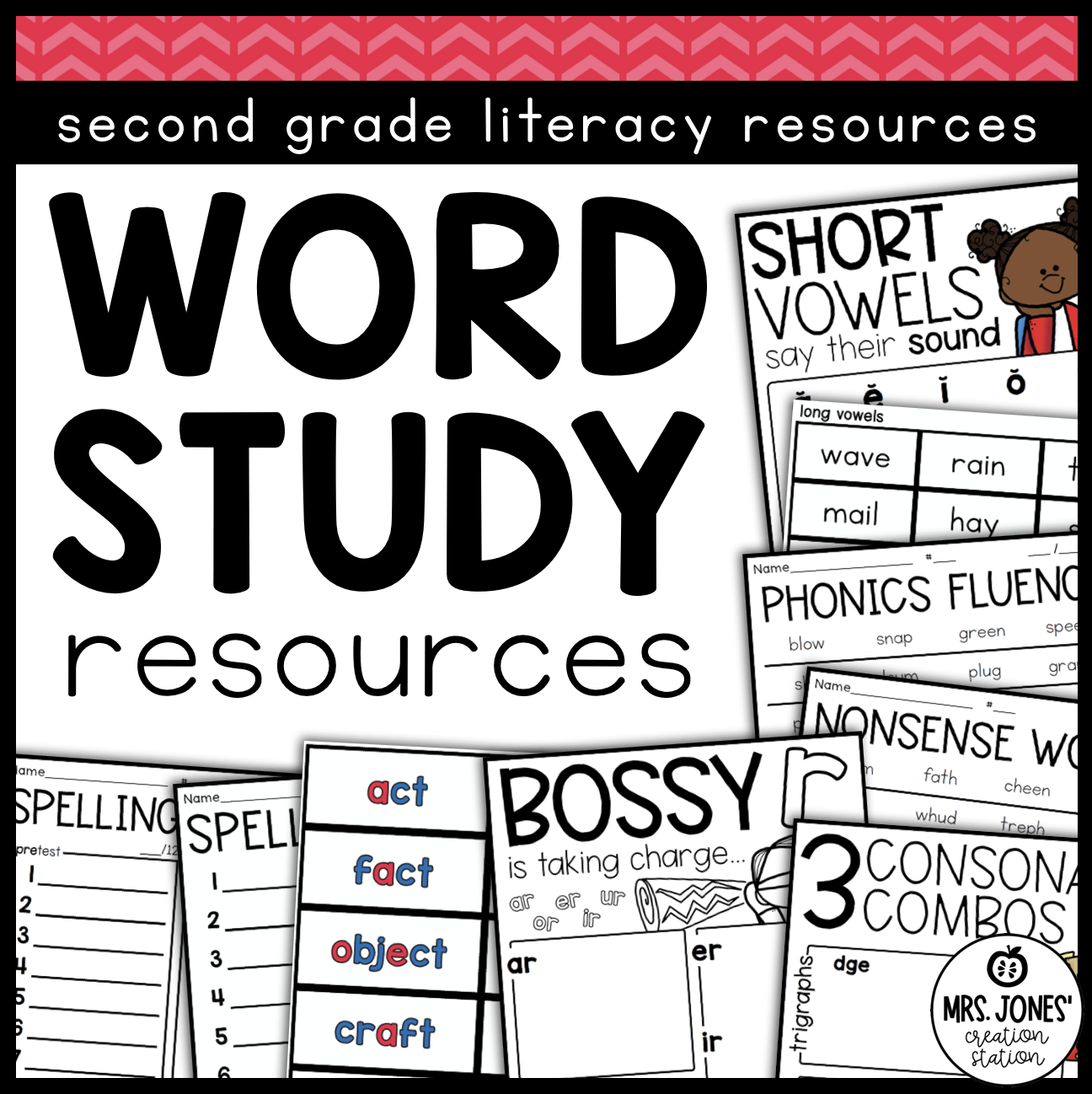
Make first-quarter phonics instruction easier to plan with these Second Grade Phonics Word Study activities. This resource provides 9 weeks of systematic practice with decoding, spelling, phonics patterns, word reading, and fluency.
Students begin with a Kindergarten and First Grade sight word review. Then, instruction moves through short vowels, long vowels, blends, consonant digraphs, double consonants, ending blends, consonant clusters and trigraphs, and r-controlled vowels.
Each week follows a consistent structure. First, introduce or review the phonics pattern with an anchor chart. Next, use the included word cards for guided practice. Then, students apply their learning through decoding and encoding.
Finally, the quick monitoring pages help you check whether students can actually read and spell the targeted pattern.
As a result, you get more than a collection of phonics worksheets. You have a repeatable word study routine that supports instruction, practice, and progress monitoring throughout the first quarter.
WHAT’S INCLUDED
9 Weeks of Second Grade Word Study
The first-quarter scope and sequence includes:
Week 1: Kindergarten & First Grade Sight Word Review
Review previously taught high-frequency words and build automatic word recognition.
Week 2: Short Vowels
Review short vowel sounds and apply them when reading words.
Week 3: Long Vowels
Practice long vowel patterns and word reading.
Week 4: Initial Blends
Work with beginning consonant blends such as bl, cl, br, fr, and additional initial blends.
Week 5: Consonant Digraphs
Practice common consonant digraphs including ch, sh, th, ph, and wh.
Week 6: Doublets
Work with double consonant patterns including ff, ll, ss, and zz.
Week 7: Ending Blends
Practice ending consonant blends such as ct, ld, lk, mp, and nd.
Week 8: Consonant Clusters & Trigraphs
Move into more complex consonant combinations and trigraphs, including patterns such as dge and tch.
Week 9: R-Controlled Vowels
Practice reading and spelling words containing r-controlled vowel patterns.
EACH WEEK INCLUDES
Color Anchor Chart
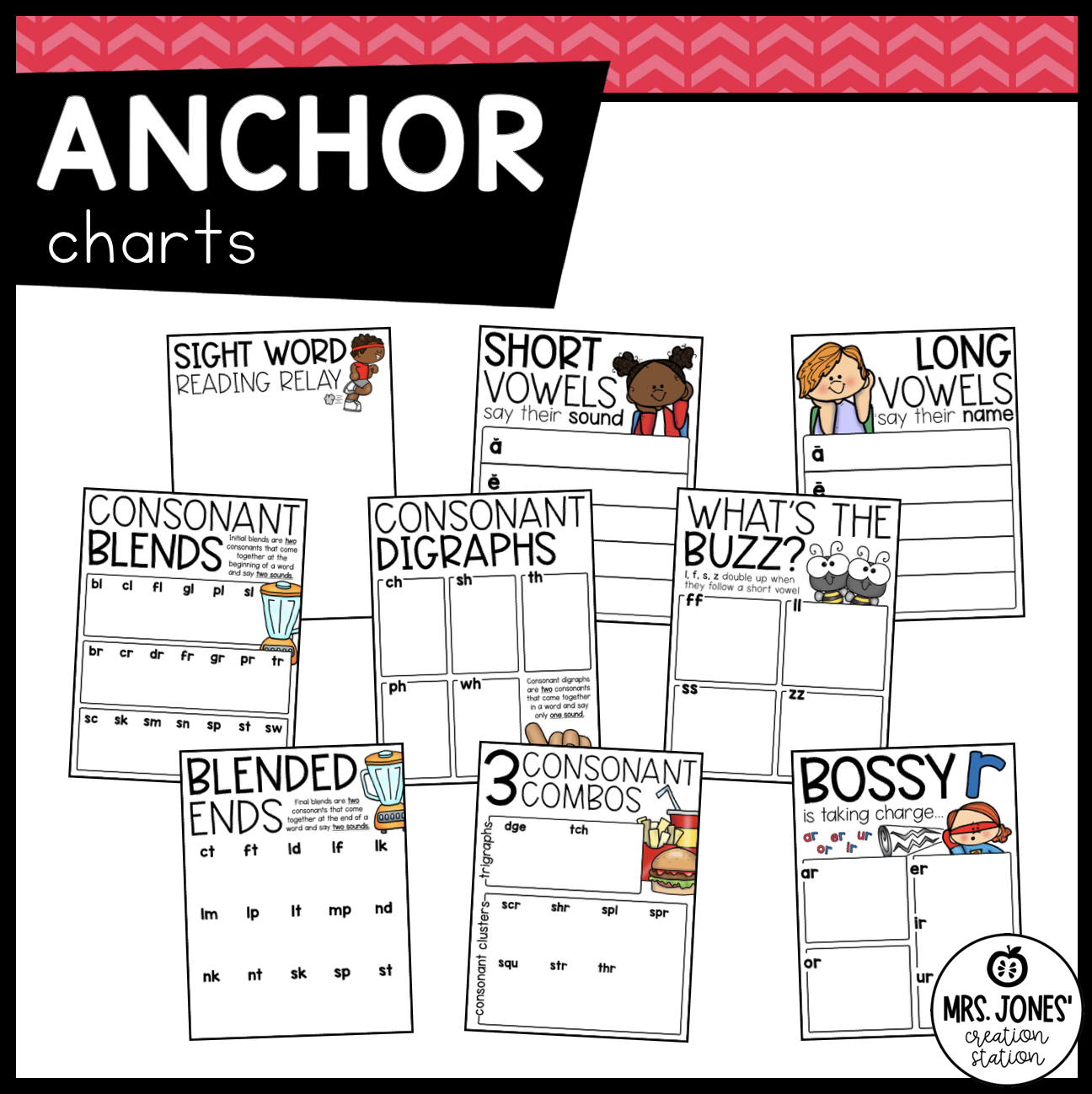
Use the full-color phonics anchor chart to introduce or review the weekly skill.
Print it as a full-size classroom poster or bring it into small-group instruction as a visual reference.
The preview shows charts for skills such as short vowels, long vowels, consonant blends, consonant digraphs, double consonants, ending blends, consonant clusters and trigraphs, and r-controlled vowels.
Black-and-White Anchor Chart
A black-and-white version is also included.
Project it to create an anchor chart with your students, or print copies for individual student reference.
This gives you the option to use the phonics visual as either a teacher-led instructional tool or a student resource.
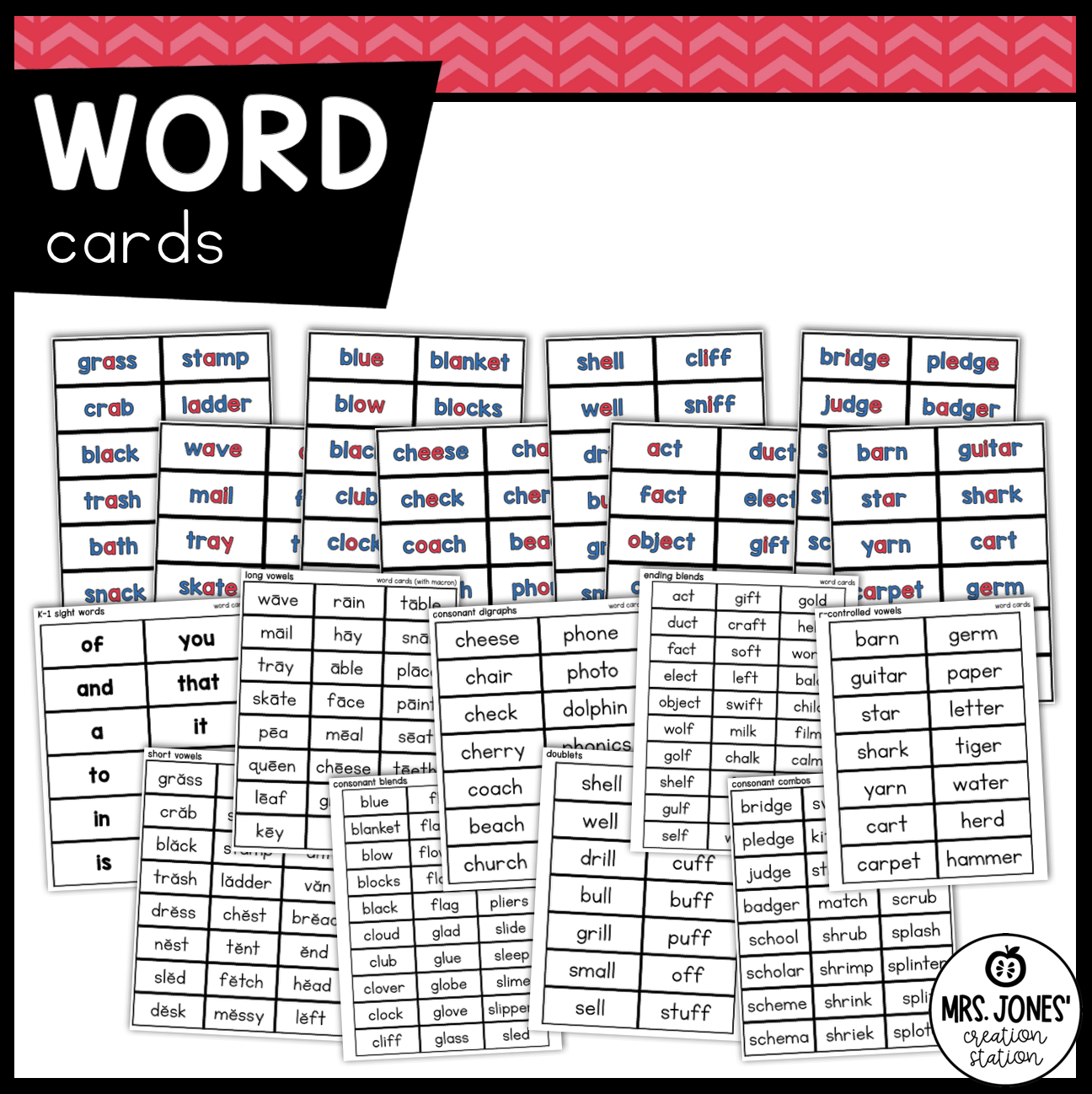
Color Word Cards
Use the color word cards for:
- Whole-group phonics practice
- Small groups
- Word study
- Partner reading
- Word sorting
- Literacy stations
- Intervention
- Fluency practice
The cards visually highlight targeted spelling patterns, helping students focus on the important phonics feature within each word.
Black-and-White Word Cards
Black-and-white word cards are also included.
Use these with the anchor chart, during guided word study, or as an additional option when you do not need color printing.
Decoding Monitoring
Check whether students can apply the weekly phonics pattern while reading words.
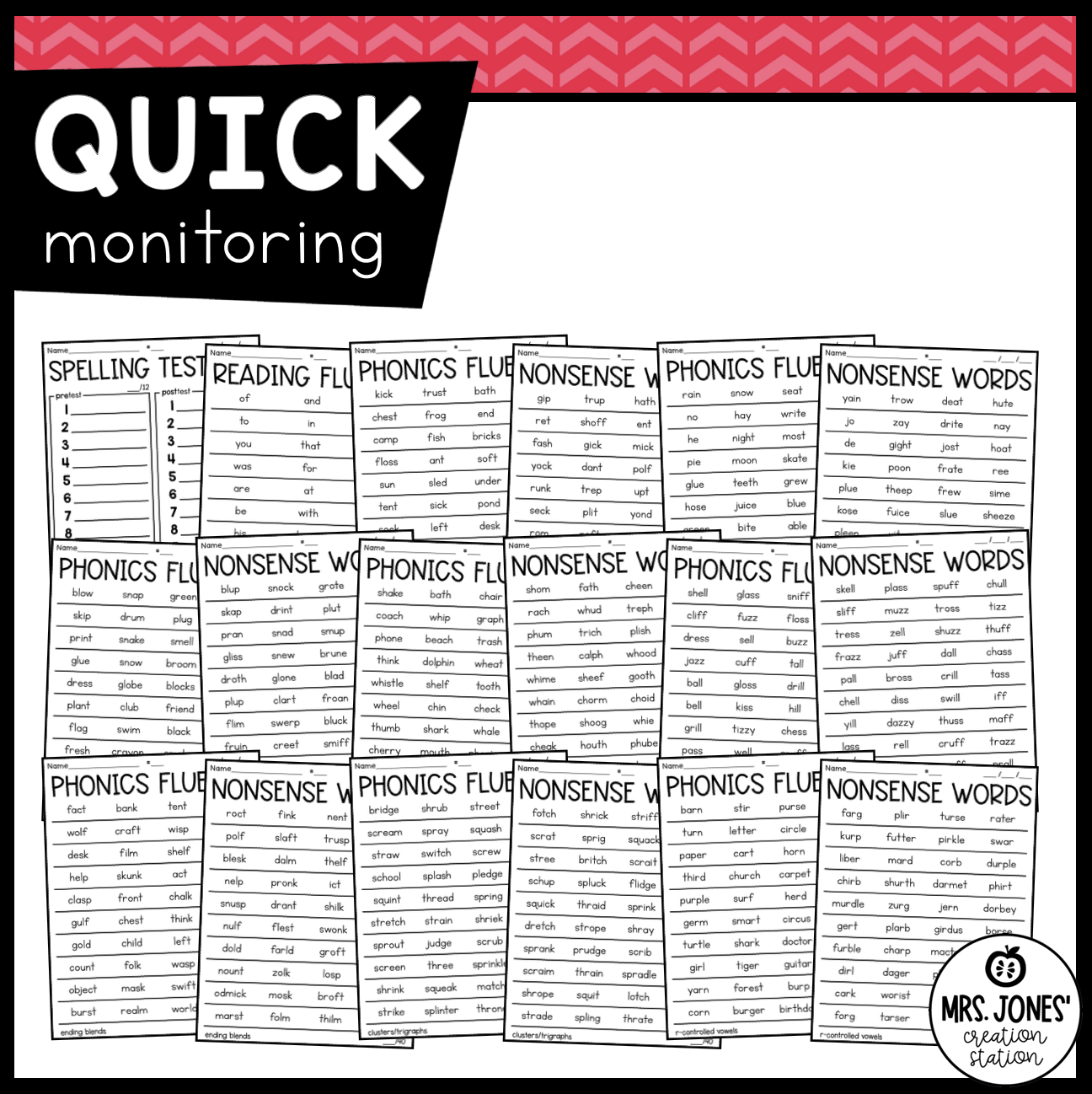
The quick decoding monitoring pages include both real words and nonsense words. This helps you see whether students are applying the phonics pattern rather than relying only on memorized vocabulary.
Encoding Monitoring
Each week also includes two versions of encoding monitoring.
Students demonstrate their understanding by spelling words that use the targeted phonics pattern.
Together, the decoding and encoding checks give you a quick look at both sides of phonics learning: Can students read the pattern, and can they spell it?
SKILLS COVERED
- Second grade phonics
- Word study
- Decoding
- Encoding
- Spelling
- Word reading
- Reading fluency
- High-frequency word review
- Short vowels
- Long vowels
- Initial consonant blends
- Consonant digraphs
- Double consonants
- Ending blends
- Consonant clusters
- Trigraphs
- R-controlled vowels
- Phonics pattern recognition
- Real word decoding
- Nonsense word decoding
- Phonics progress monitoring
TEACH IT • PRACTICE IT • MONITOR IT
The consistent structure makes it easier to establish a predictable phonics routine.
Teach It
First, introduce the weekly phonics pattern with the anchor chart.
Model the sound-spelling relationship and read example words together.
Practice It
Next, use the word cards for repeated reading and word study.
Students can identify the targeted pattern, read the words, compare words, and practice applying the weekly skill.
Monitor It
Then, use the decoding pages to check word-reading skills with both real and nonsense words.
Finally, use the encoding pages to see whether students can apply the same phonics knowledge when spelling.
This progression helps move students from seeing the pattern to reading it and spelling it independently.
HOW TO USE
Whole-Group Phonics
First, introduce the weekly skill with the anchor chart.
Next, model how the target pattern works within words.
Then, use the word cards for guided reading and word analysis.
Keep the anchor chart available throughout the week so students can refer back to the pattern.
Small Groups
Choose the word cards and monitoring activities that match student needs.
For example, one group may need additional guided decoding while another is ready to work more independently with the target pattern.
Reading Intervention
Use the resource for students who need additional practice with foundational phonics patterns.
The predictable weekly structure makes it easy to target a specific skill without introducing an entirely different activity.
Quick Progress Monitoring
Use the decoding and encoding pages after instruction to see who is ready to move forward and who needs additional support.
Because students work with both reading and spelling, you get a broader picture of how well they understand the pattern.
WHY TEACHERS LOVE IT
- Provides 9 weeks of organized phonics instruction
- Covers first-quarter second grade word study skills
- Includes color and black-and-white anchor charts
- Includes color and black-and-white word cards
- Combines decoding and encoding
- Includes real and nonsense word reading
- Provides two encoding monitoring options
- Supports spelling and reading
- Makes quick progress checks easier
- Uses a consistent weekly structure
- Works for whole-group phonics
- Supports small-group instruction
- Can be used for intervention
- Gives students repeated practice with phonics patterns
- Reduces the need to piece together weekly word study materials
A CLOSER LOOK AT QUICK MONITORING
Teaching the phonics pattern is only part of the job. You also need to know whether students can apply it independently.
The included decoding monitoring checks word reading with both real and nonsense words.
For example, the preview shows separate phonics fluency and nonsense word pages across the different phonics patterns.
In addition, the encoding checks ask students to spell words using the targeted pattern.
These quick checks can help you decide whether students are ready for the next skill or need more practice in whole group, small group, or intervention.
PERFECT FOR
- Second Grade Phonics
- First Quarter Word Study
- Whole-Group Phonics
- Small-Group Reading
- Word Study
- Spelling Instruction
- Phonics Intervention
- Reading Intervention
- RTI / MTSS
- Decoding Practice
- Encoding Practice
- Phonics Fluency
- Progress Monitoring
- Homeschool Phonics Instruction


Reviews
There are no reviews yet.