There’s something magical about watching a volcano erupt.
The bubbling “lava,” the excited cheers, and the anticipation make it one of those science activities learners remember long after the lesson is over.
But for me, the volcano isn’t the lesson.
It’s the opportunity to teach learners how scientists think.
Instead of simply mixing baking soda and vinegar, we slow down, make predictions, follow directions, observe carefully, and discuss what happened. Those are the habits that help little learners begin thinking like scientists.
Start with the Scientific Method
Before introducing any experiment, I like talking about what scientists actually do.
Scientists don’t just perform experiments.
They ask questions.
They make predictions.
They follow procedures.
They observe.
They share what they discover.
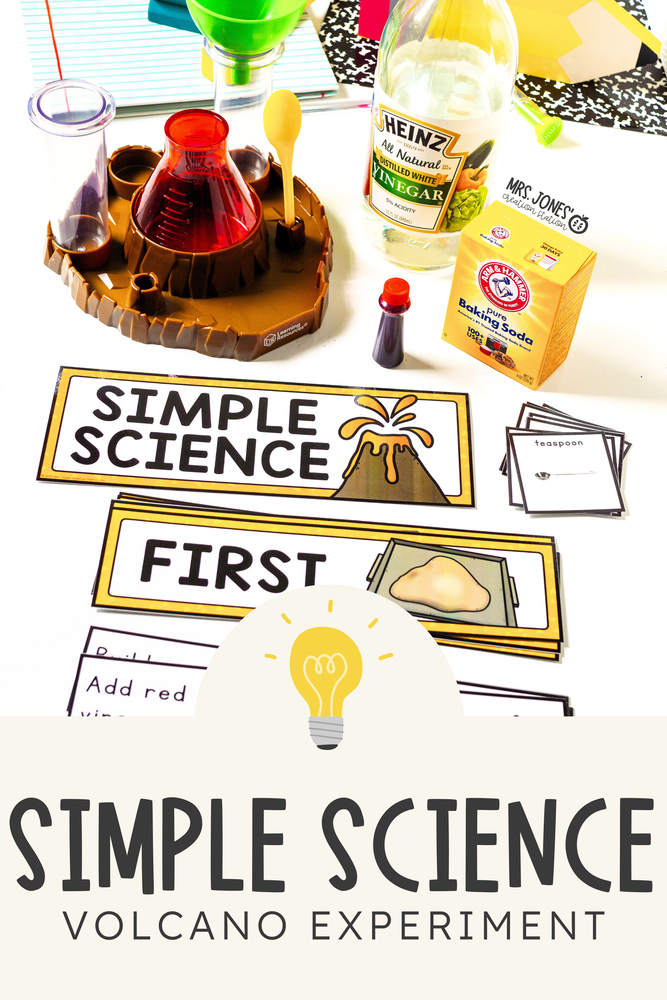
During our What Is Science? unit, learners spend the week exploring science through read alouds, science safety, science tools, and simple investigations before completing their first experiment on Friday. By the time we build our volcanoes, they already understand how scientists work and how to safely complete an investigation.

I am a Scientist Reader
Introduce young learners to what scientists do while helping them discover that they can be scientists, too!
Build Excitement Before the Experiment
One of my favorite ways to introduce the lesson is with a read aloud.
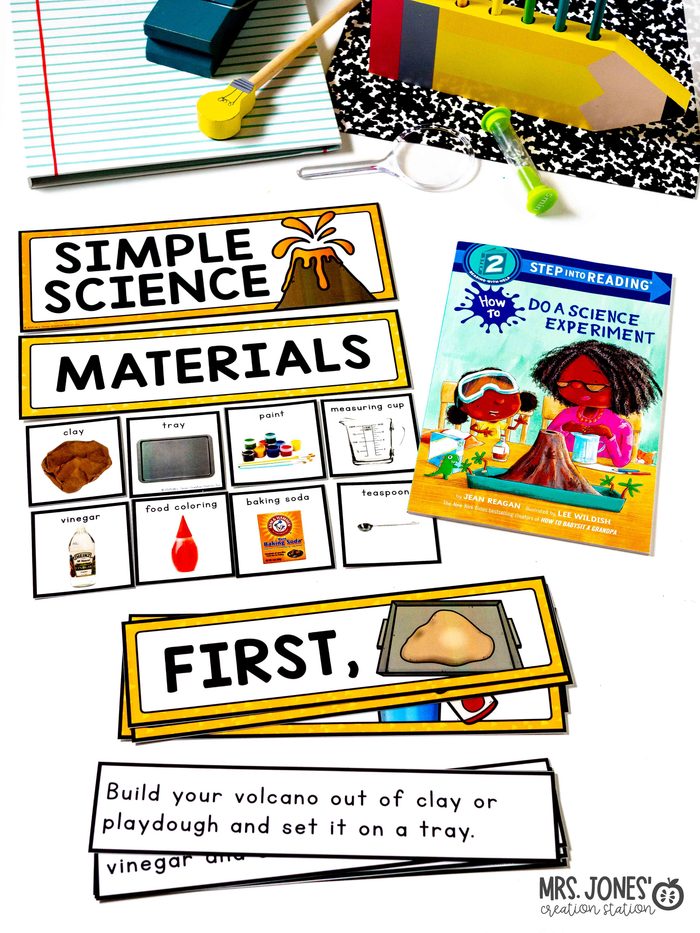
Books like How to Do a Science Experiment help learners understand that every investigation follows a series of steps before they begin their own experiment. The read aloud naturally leads into reviewing procedures and science safety before gathering materials.
Before we begin, we also ask questions like:
- What do you think will happen?
- Why do you think that?
- What will the “lava” look like?
- What do you notice about our materials?
These conversations encourage learners to think before they investigate.
Gather Your Materials
You don’t need expensive supplies to create an engaging science lesson.
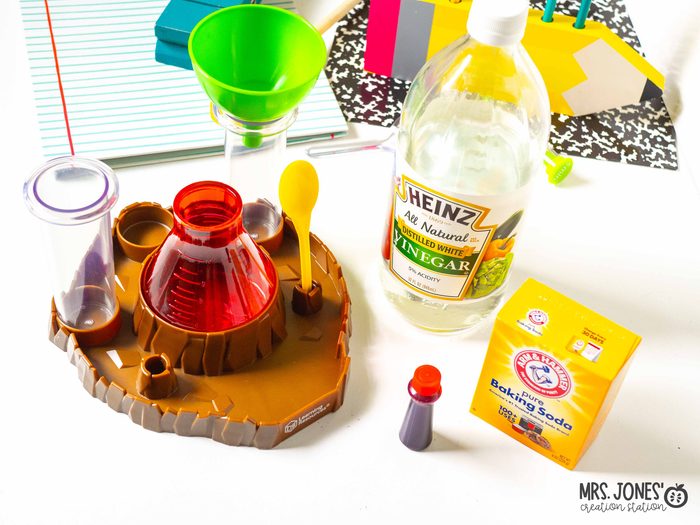
For this investigation you’ll need:
- Clay or playdough
- Baking soda
- White vinegar
- Red food coloring
- Measuring cup
- Teaspoon
- Tray or baking sheet
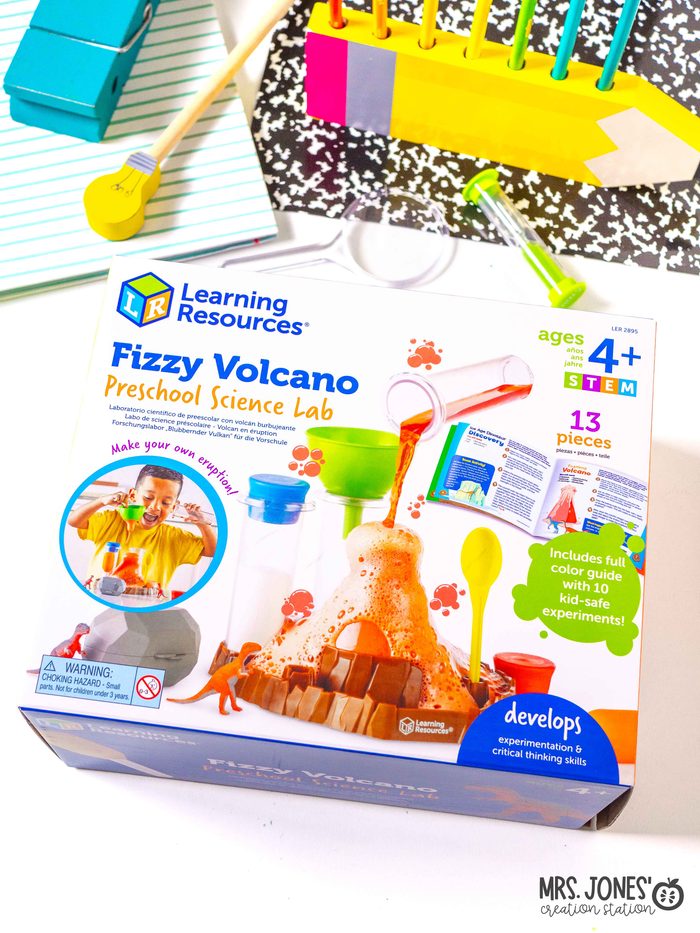
The Learning Resources Volcano is another fun option if you prefer a reusable classroom volcano instead of building one from clay. It saves prep time and can be used year after year for science investigations.
Conduct the Volcano Investigation
I like keeping the procedure simple so learners can focus on observing instead of remembering complicated directions.
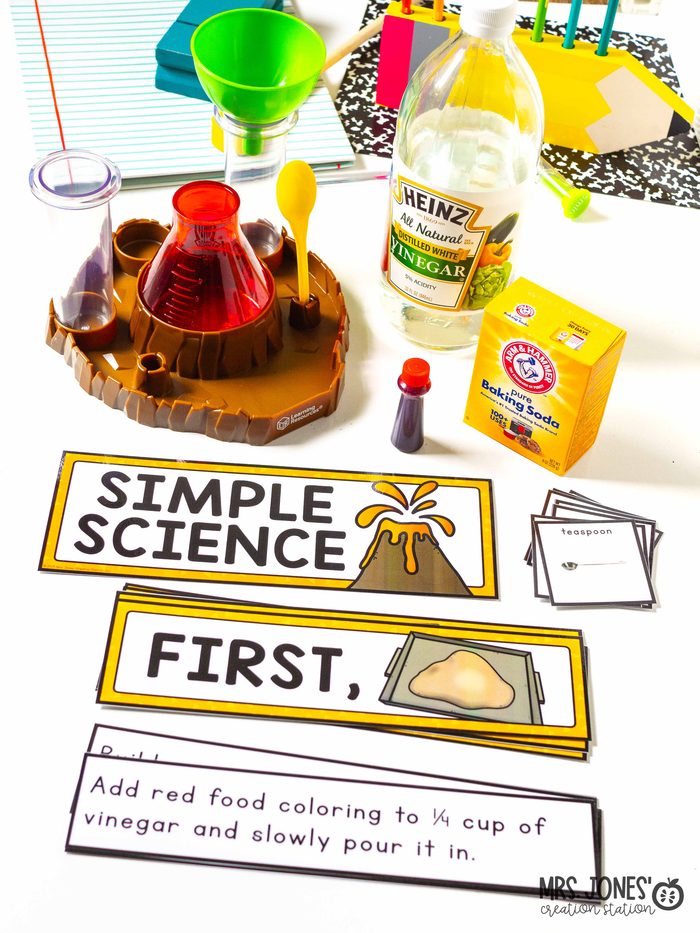
First, build your volcano from clay or playdough and place it on a tray.
Then, add two teaspoons of baking soda to the crater.
Next, mix red food coloring into one-quarter cup of vinegar and slowly pour it into the volcano.
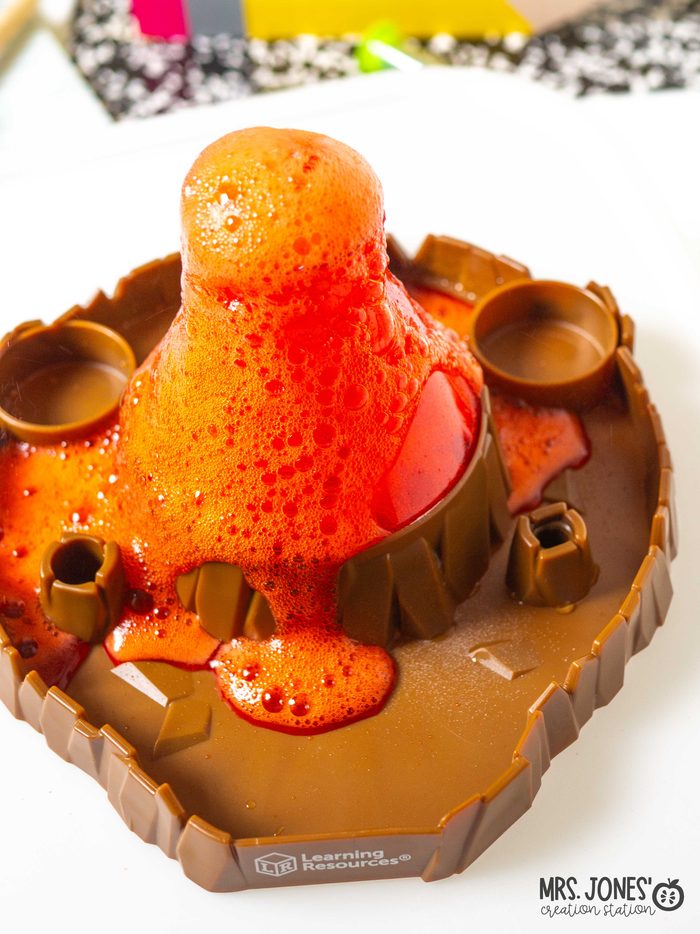
Last, step back and observe the eruption together. Discuss what learners notice as the bubbling “lava” flows down the sides of the volcano.
Talk Like Scientists
The most valuable part of the lesson happens after the eruption.
Rather than immediately cleaning up, spend time discussing what learners observed.
Ask questions like:
- What happened when we poured in the vinegar?
- Was your prediction correct?
- What surprised you?
- What would you change next time?
- Why do you think the volcano erupted?
These conversations help learners practice scientific thinking while building vocabulary and communication skills.
Extend the Learning
After the experiment, learners can draw or write about the investigation using a simple recording page.
My investigation pages give learners opportunities to:
- Draw the steps of the experiment.
- Sequence the procedure using First, Then, Next, Last.
- Record materials, predictions, and conclusions using an age-appropriate science investigation sheet.
This extension helps reinforce sequencing, writing, and science vocabulary while allowing learners to reflect on what they observed.
Everything You Need for Hands-On Science
If you’re looking for a complete introduction to science, my What Is Science? Unit includes five teacher-friendly lesson plans that introduce learners to science through read alouds, science safety, science tools, and simple investigations before completing a volcano experiment or another investigation of your choice.

You’ll also find printable investigation pages, science vocabulary activities, literacy connections, and hands-on lessons designed specifically for kindergarten and early elementary learners.
If your learners enjoy this investigation, be sure to grab my FREE Making Rain Experiment for another engaging way to explore science together.
Grab This Freebie