

Build Compound Word Recognition with Hands-On Word Work
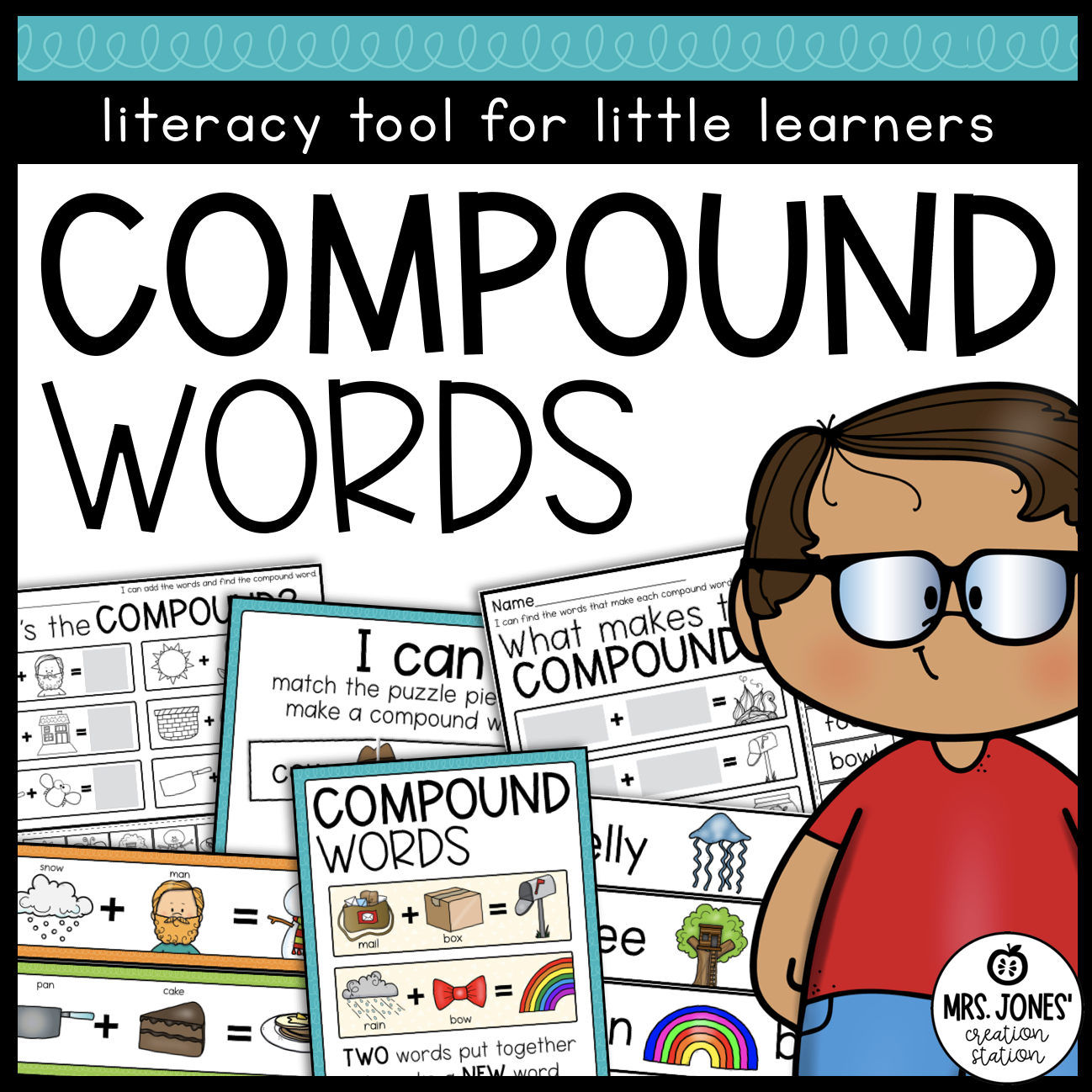
Help young readers understand how two smaller words combine to create a compound word with a new meaning with these hands-on compound words activities.
Students use colorful pictures and familiar vocabulary to explore words such as basketball, football, wheelchair, sunflower, mailbox, rainbow, treehouse, butterfly, snowman, and pancake.
As a result, students can see how each smaller word contributes to the meaning of the new compound word. Picture support makes the concept concrete while also building vocabulary and word recognition.
Students begin by combining words and pictures. Next, they match compound word equations, complete puzzles, and record their answers. Then, they reverse the process by breaking compound words into their two smaller words.
Finally, independent workpages give students opportunities to combine, identify, match, and write compound words on their own.
Use these activities for whole-group literacy lessons, word work, literacy centers, small groups, independent practice, or review.
WHAT’S INCLUDED
COMPOUND WORD POSTERS
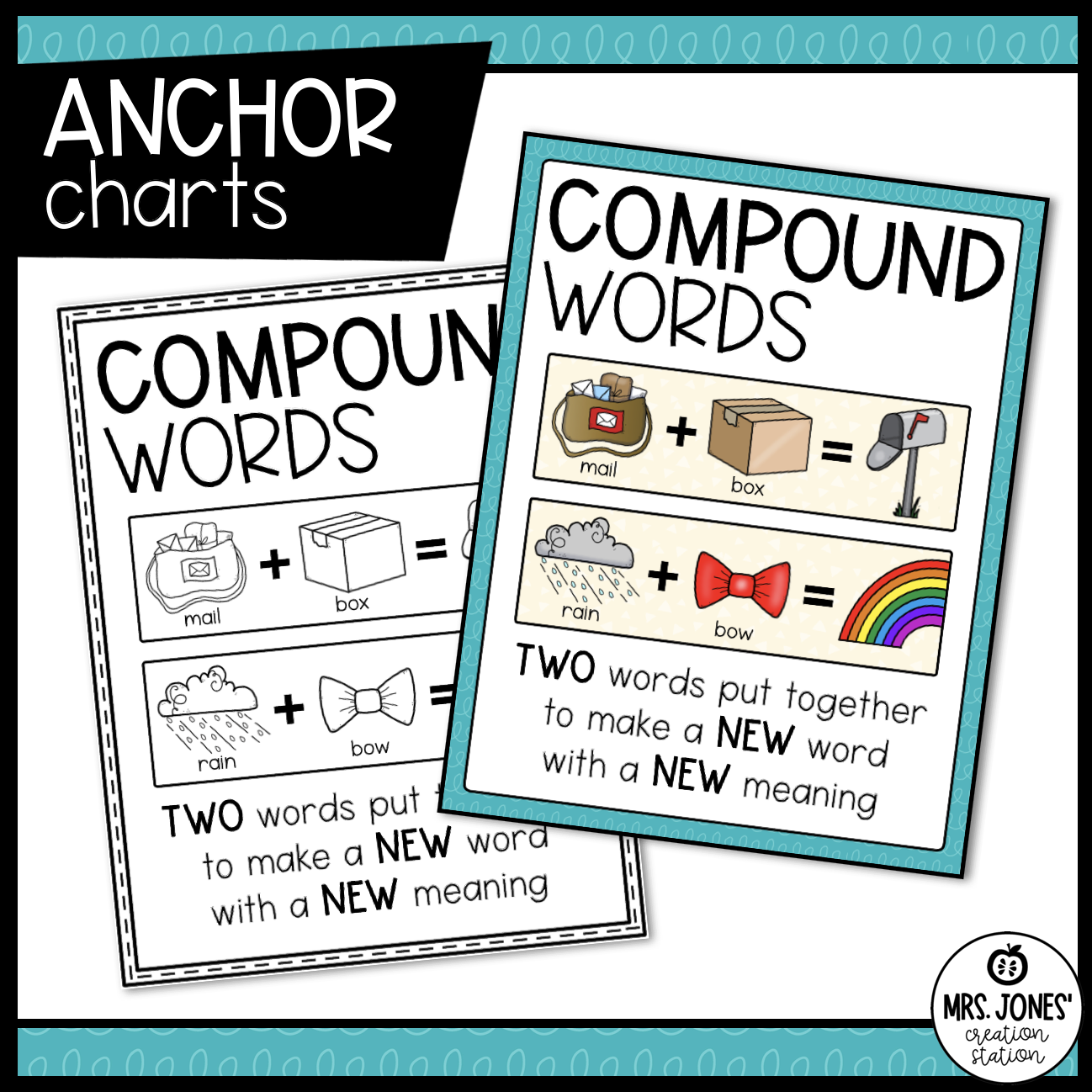
Introduce compound words with a clear visual definition:
Two words put together to make a new word with a new meaning.
The teaching poster uses picture-supported examples such as mail + box = mailbox and rain + bow = rainbow.
Both color and black-and-white versions are included.
COMPOUND WORD PICTURE EQUATIONS
Students visually combine two smaller words to discover a compound word.
Examples include:
- basket + ball = basketball
- foot + ball = football
- wheel + chair = wheelchair
- ear + ring = earring
- clip + board = clipboard
- sun + flower = sunflower
- mail + box = mailbox
- rain + bow = rainbow
- tree + house = treehouse
- butter + fly = butterfly
- snow + man = snowman
- pan + cake = pancake
The picture support helps students connect the meaning of each individual word with the new compound word.
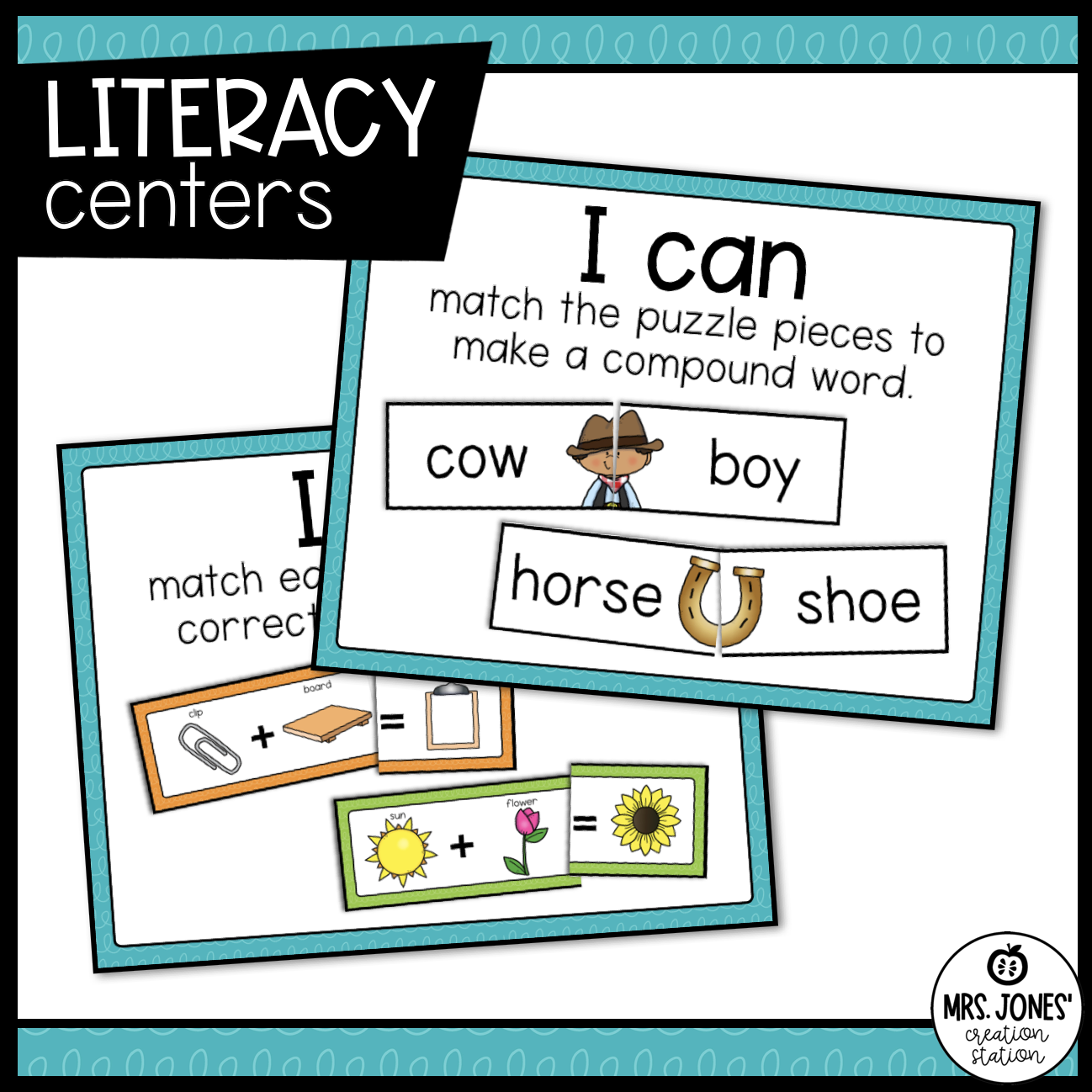
COMPOUND WORD MATCHING CENTER
Students match each picture equation with the correct compound word.
For example, students might see sun + flower and find the matching sunflower card.
This hands-on center reinforces:
- Compound word recognition
- Word meaning
- Vocabulary
- Picture-word connections
- Word analysis
An I Can direction card supports independent center use.
COMBINING COMPOUND WORDS WORKPAGE
After working with the picture cards, students apply the skill independently.
Students look at compound word pictures and write the complete word on the recording page.
This moves students from hands-on matching into written word work.
COMPOUND WORD PUZZLES
Students match two word parts to create a complete compound word.
The puzzle cards include picture support in the center, helping students check whether the two words make sense together.
Examples include:
- cup + cake
- cow + boy
- horse + shoe
- jelly + fish
- tree + house
- rain + bow
- air + plane
- bath + robe
- camp + fire
- foot + print
- hand + shake
- fish + bowl
An I Can card explains the activity for independent literacy center use.
COMPOUND WORD MATCH
Students match compound word parts and write the completed words on the recording page.
This activity provides another opportunity to practice recognizing how two individual words combine into one new word.
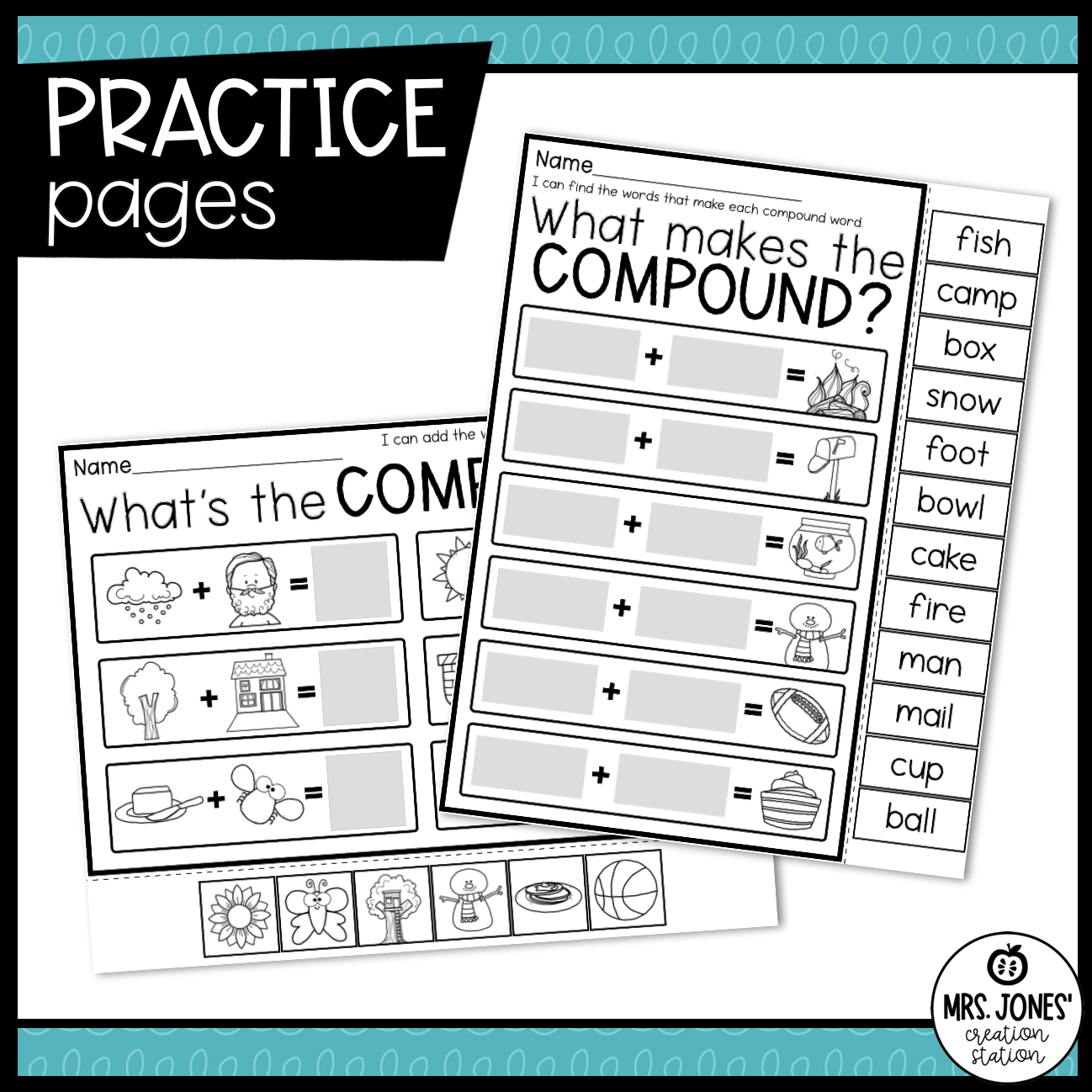
WHAT’S THE COMPOUND?
Students look at two pictures, combine the words, and determine the compound word they create.
For example, students combine pictures representing rain + bow to create rainbow.
Students cut and paste the correct compound word pictures to complete the equations.
WHAT MAKES THE COMPOUND?
Now students reverse the process.
Instead of combining two words, students look at the completed compound word picture and determine the two smaller words that created it.
For example:
camp + fire = campfire
This activity helps students understand compound word structure instead of simply memorizing vocabulary.
I CAN WRITE COMPOUND WORDS
Finally, students apply what they have learned by generating compound words independently.
They write:
word + word = compound word
This open-ended page works well for independent practice, assessment, review, or an extension activity.
SKILLS COVERED
- Compound words
- Combining words
- Breaking apart compound words
- Word structure
- Word recognition
- Vocabulary
- Word meaning
- Picture-word connections
- Reading
- Writing
- Word analysis
- Early literacy skills
FROM TWO WORDS TO ONE NEW WORD
These activities help students understand how compound words work instead of simply memorizing a list.
See It: Introduce compound words with visual examples and pictures.
Combine It: Put two individual words together to create a new word.
Match It: Match picture equations with the correct compound words.
Build It: Use puzzles to connect two words and form a compound word.
Break It Apart: Identify the two smaller words within a compound word.
Write It: Record and create compound words independently.
HOW TO USE
First, introduce compound words with the teaching poster and picture examples.
Next, model how two familiar words can combine to create a word with a new meaning.
Then, use the colorful picture equations to practice additional examples together.
Afterward, move students into the matching center and compound word puzzles for hands-on practice.
Finally, use the recording pages and independent activities to check student understanding.
Use these Compound Words Activities for:
- Whole-group literacy
- Literacy centers
- Word work
- Small groups
- Vocabulary practice
- Independent practice
- Morning work
- Reading intervention
- Early finisher activities
- Homeschool literacy
- Compound word review
WHY TEACHERS LOVE IT
- Uses clear picture support
- Makes an abstract word concept more concrete
- Practices combining two words into one
- Practices breaking compound words into smaller words
- Includes hands-on matching activities
- Includes compound word puzzles
- Provides independent recording pages
- Moves from teacher modeling to independent application
- Builds vocabulary and word recognition
- Includes open-ended writing practice
- Works for whole-group, centers, and small groups
- Provides several ways to practice the same skill
AMAZON CLASSROOM FAVORITES
Need supplies for your literacy centers?
Visit my Amazon Storefront for classroom favorites such as laminating supplies, storage containers, dry-erase markers, and other literacy center supplies.


Reviews
There are no reviews yet.