

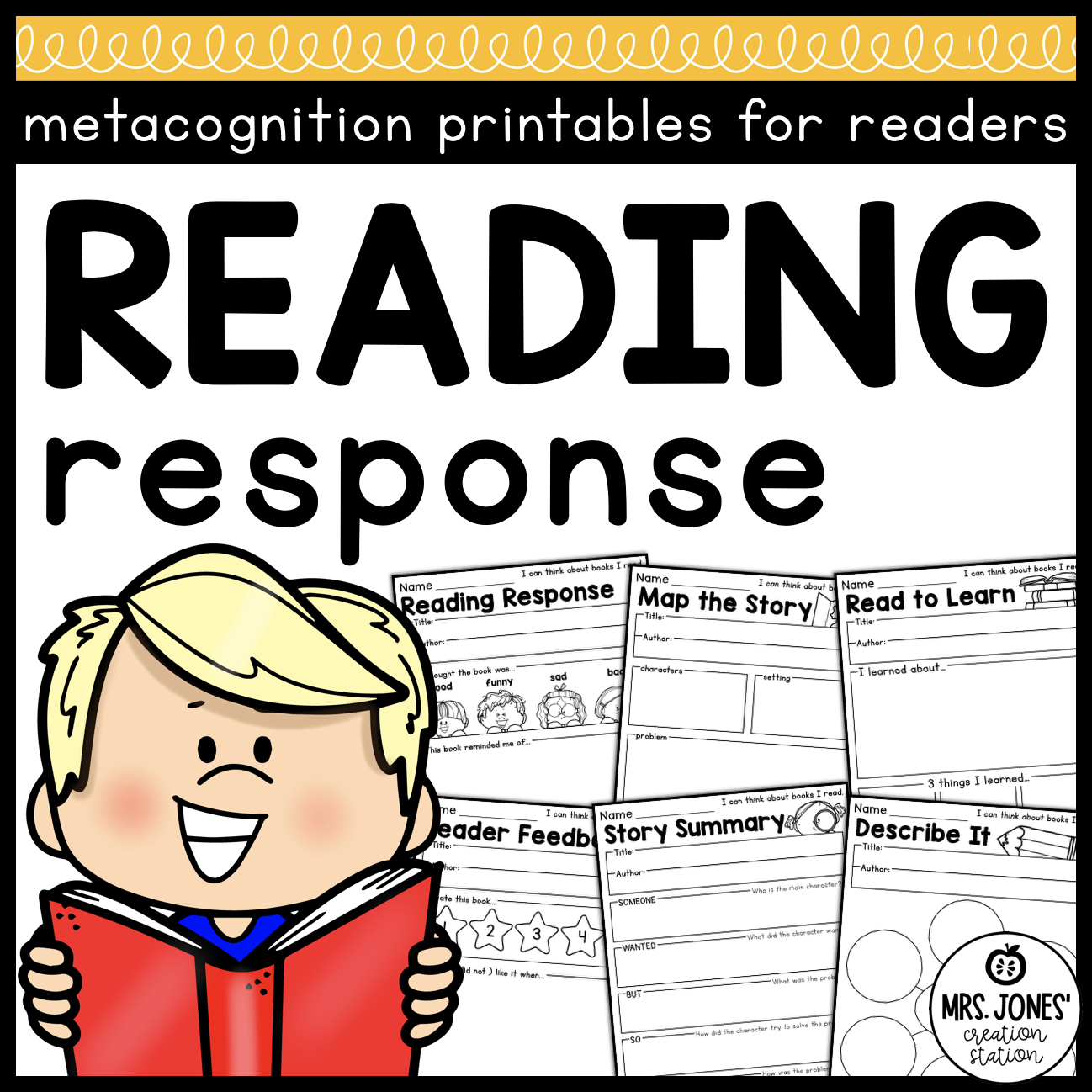
Reading Response Printables for Young Readers
Help students move beyond simply finishing a book with these Reading Response Worksheets for Kindergarten, First Grade, and early elementary readers.
This collection gives students multiple ways to think about, respond to, and discuss books they read. Instead of using the same response page every time, you can choose a printable that matches the comprehension skill or reading strategy you are teaching.
Students can explore story elements, character traits, problem and solution, main idea, summarizing, comparing texts, vocabulary, book opinions, and more. Several pages also encourage readers to make personal connections and explain their thinking.
Because the pages are designed to work with a variety of books, you can use them throughout the year during read alouds, guided reading, independent reading, literacy centers, or small groups.
WHAT’S INCLUDED
This resource includes a variety of reading response and metacognition printables that can be paired with fiction and informational texts.
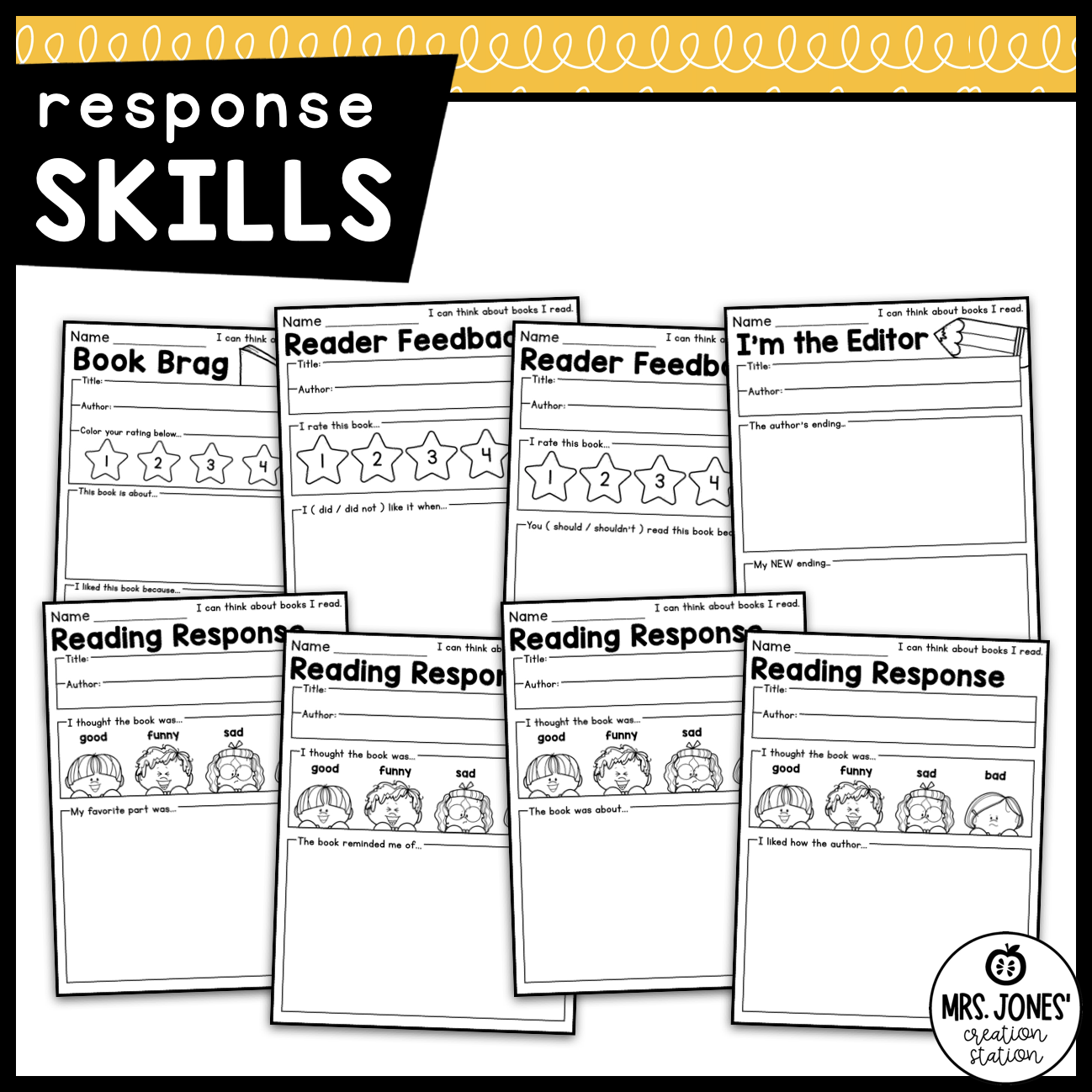
READING RESPONSE & BOOK OPINION
Students can rate books, share opinions, make connections, and explain their thinking.
Included prompts focus on:
- Favorite part
- What the book reminded them of
- What the book was about
- Author choices
- Book ratings
- Reasons for liking or disliking a book
- Book recommendations
The Book Brag and Reader Feedback pages also encourage students to support their opinions with reasons.
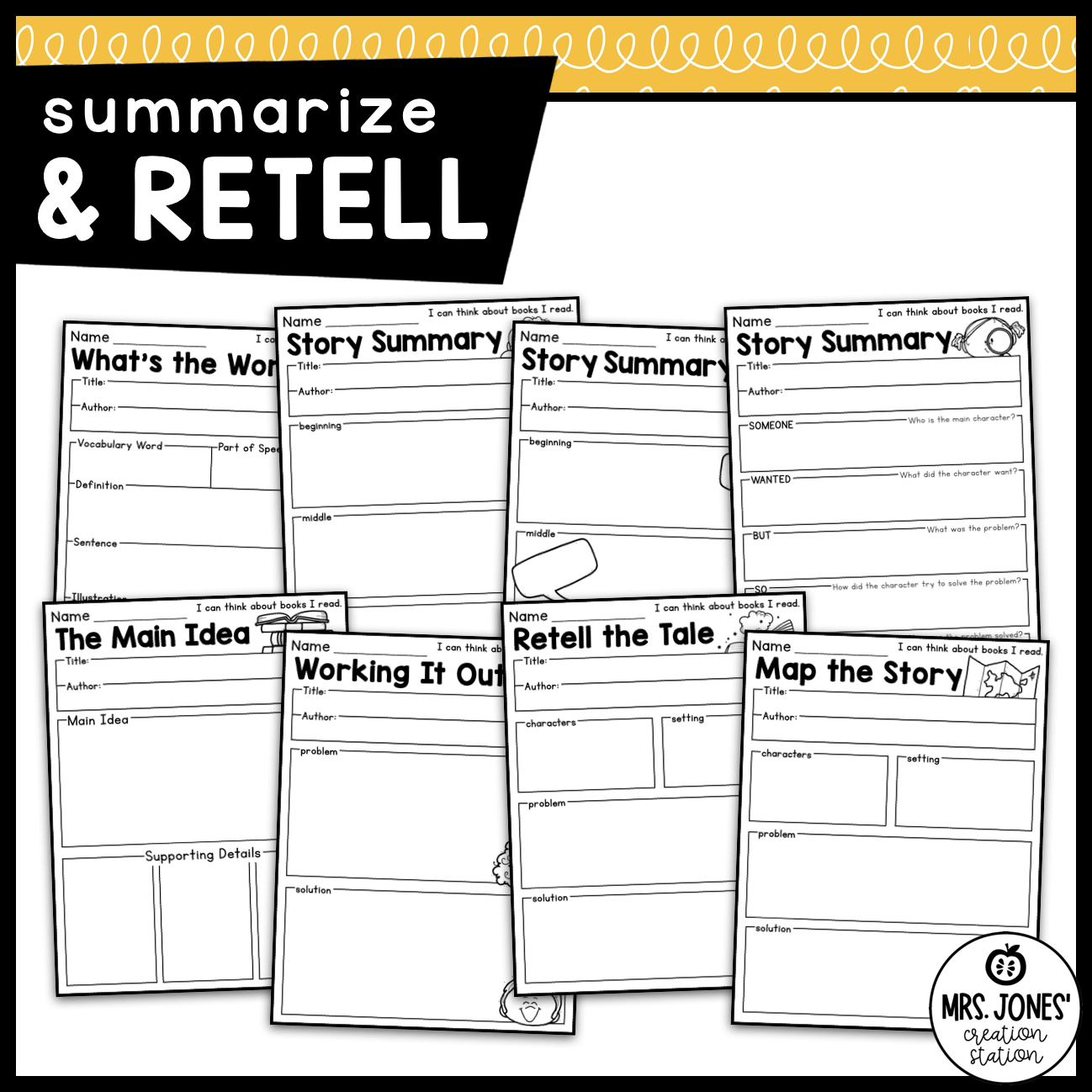
STORY ELEMENTS & SUMMARIZING
Several printables help readers organize important information from fiction texts.
Students practice:
- Beginning, middle, and end
- Characters
- Setting
- Problem
- Solution
- Retelling
- Story mapping
- Summarizing
A Somebody, Wanted, But, So, Then organizer guides students through identifying the main character, the character’s goal, the problem, attempts to solve it, and the final solution.
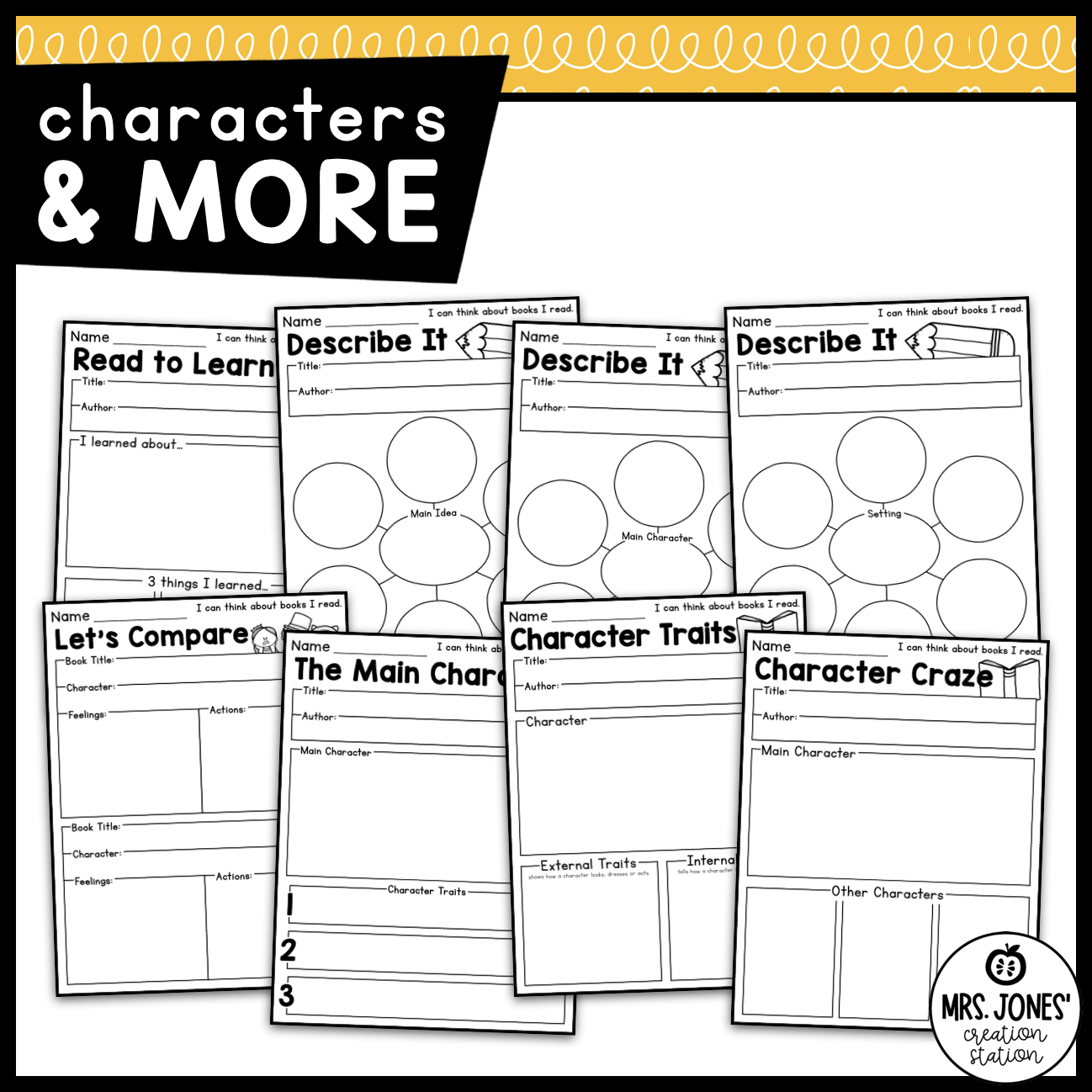
CHARACTER ANALYSIS
Help students take a closer look at story characters with printables focused on:
- Main character
- Other characters
- Character traits
- Internal traits
- External traits
- Character feelings
- Character actions
- Comparing characters
Students can also identify three traits for a main character or compare characters from different books.
MAIN IDEA & INFORMATIONAL TEXT
The collection is not limited to fiction.
Students can identify a main idea and supporting details or use the Read to Learn page to record what a text taught them and three things they learned.
COMPARE & CONTRAST
Students can compare two books with a Venn diagram. Another organizer allows readers to compare characters by examining their feelings and actions.
These pages provide a visual way to organize similarities and differences before students discuss or write about them.
VOCABULARY
The What’s the Word? printable helps students explore vocabulary from their reading.
Students record:
- Vocabulary word
- Part of speech
- Definition
- Sentence
- Illustration
This page works well during independent reading, guided reading, or vocabulary instruction.
SKILLS COVERED
- Reading comprehension
- Metacognition
- Responding to literature
- Story elements
- Characters and setting
- Problem and solution
- Beginning, middle, and end
- Retelling
- Summarizing
- Main idea
- Supporting details
- Character traits
- Internal and external traits
- Comparing characters
- Compare and contrast
- Making text connections
- Expressing opinions about books
- Supporting opinions with reasons
- Informational text comprehension
- Vocabulary development
- Writing about reading
HOW TO USE
First, choose a printable that matches the reading skill you are teaching. Then, model the skill with a familiar read aloud before asking students to complete the response independently.
During guided reading or small groups, select pages that target skills your students need to practice. For example, use Map the Story for story elements or Working It Out when focusing on problem and solution.
Next, add selected pages to literacy centers or independent reading routines. Since the printables work with different books, you can reuse the formats throughout the school year.
Finally, use completed responses for conferences, comprehension checks, reading portfolios, or class discussions.
WHY TEACHERS LOVE IT
- Works with a variety of books
- Includes fiction and informational text responses
- Covers multiple comprehension skills
- Provides different response formats
- Encourages students to think about their reading
- Includes story elements and summarizing activities
- Provides character analysis practice
- Includes main idea and supporting details
- Builds compare-and-contrast skills
- Includes vocabulary practice
- Works with read alouds and independent reading
- Easy to use for literacy centers
- Helpful for guided reading and small groups
- Black-and-white pages make classroom printing simple
Most importantly, you can choose the page that fits your lesson instead of trying to make one generic reading response work for every book and every skill.


Reviews
There are no reviews yet.