

Make rhyming practice interactive during whole-group literacy instruction
This Rhyming Literacy Chart gives you an interactive way to practice rhyming words during morning meeting, circle time, whole-group literacy, small groups, or intervention.
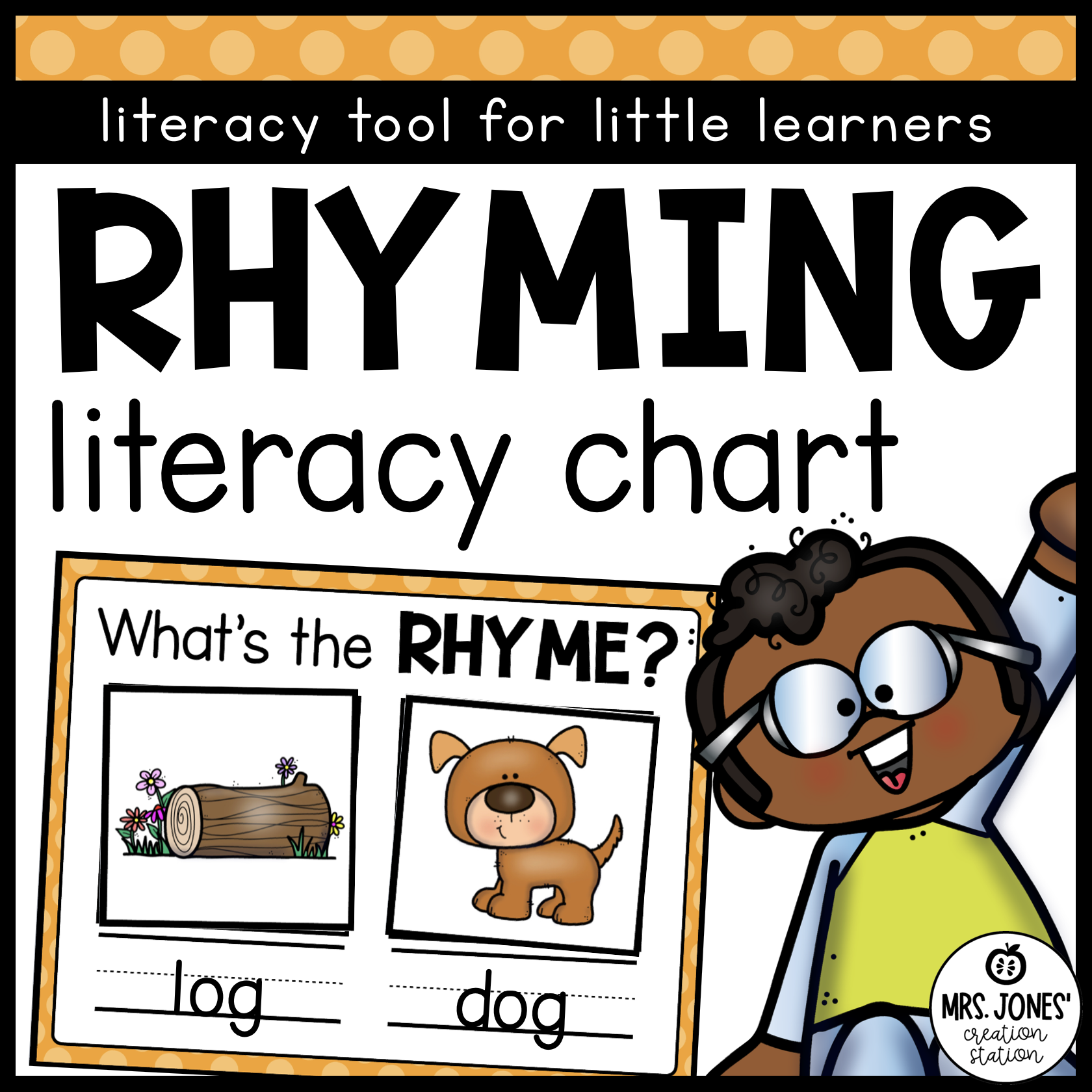
Students look at two colorful picture cards, say the words aloud, and listen for the sounds that are the same. Then, they place the pictures on the “What’s the Rhyme?” chart and write the corresponding rhyming words underneath.
As a result, students do more than simply tell you whether two words rhyme. They hear the rhyme, say the words, connect each word with a picture, and see how the rhyming words are spelled.
The resource begins with familiar short-vowel rhyming pairs such as sad/mad, cat/bat, hen/pen, pig/big, log/dog, and run/sun. Then, the picture cards extend into more advanced word patterns such as cake/rake, rain/train, bee/tree, phone/bone, snow/bow, and moon/spoon.
Plus, the predictable literacy chart format works especially well for repeated whole-group practice. Once students understand the routine, you can switch the picture cards and keep the focus on listening, comparing, and explaining rhyming words.
See how I use literacy charts during morning meeting
WHAT’S INCLUDED
“What’s the Rhyme?” Literacy Chart
The reusable chart includes:
- 2 large spaces for picture cards
- Writing space beneath each picture
- Primary-style handwriting lines
- Simple “What’s the Rhyme?” format
Students place a rhyming picture pair on the chart, identify the words, and write each word underneath its corresponding picture.
Rhyming Picture Pairs
The resource includes colorful picture pairs representing a variety of rhyming words.
Examples include:
sad/mad • tag/bag • jam/yam • pan/man • map/cap • star/car • cat/bat • red/bed • hen/pen • jet/net • pig/big • bin/fin • lip/zip • kit/hit • log/dog • mop/hop • hot/dot • tub/rub • hug/mug • drum/gum • run/sun • nut/hut
These familiar words provide plenty of practice hearing and identifying rhyme.
More Advanced Rhyming Pairs
The resource also includes rhyming words with more advanced spelling patterns.
Examples include:
cake/rake • grape/cape • rain/train • tray/hay • bee/tree • bell/yell • heat/eat • brick/stick • ring/sing • pie/tie • bike/hike • clock/sock • phone/bone • goat/boat • snow/bow • glue/blue • cube/tube • moon/spoon
This allows you to continue using the chart after students have mastered basic CVC rhyming words.
SKILLS COVERED
- Rhyming words
- Rhyme recognition
- Rhyme production
- Phonological awareness
- Listening for ending sounds
- Comparing word sounds
- Word families
- Oral language
- Picture identification
- Vocabulary development
- Word writing
- Sound-spelling connections
- Early phonics skills
HOW TO USE
Morning Meeting or Circle Time
First, display the “What’s the Rhyme?” chart where the class can see it.
Next, choose two coordinating picture cards and place them on the chart.
Then, say each picture name together. Have students listen closely to the words and identify the sounds that make them rhyme.
Invite students to repeat the rhyming pair aloud.
Finally, choose student volunteers to write the words underneath the corresponding pictures.
Repeat the routine with a new rhyming pair during future morning meetings.
Whole-Group Literacy Instruction
Use the chart when introducing or reviewing rhyming words and phonological awareness.
For example, show one picture first and ask students to name it. Then, reveal the second picture and ask students to determine whether the two words rhyme.
Encourage students to explain what they hear rather than simply answering yes or no.
Once students identify the rhyme orally, write the words together and compare their spelling patterns.
Small Groups & Intervention
The chart also works well when students need additional rhyming practice.
Start with familiar short-vowel pairs such as cat/bat or log/dog. Once students can consistently hear the rhyme, introduce pairs with more complex spelling patterns.
Because the visual routine stays the same, you can adjust the difficulty without introducing an entirely new activity.
WHY TEACHERS LOVE IT
- Makes rhyming practice interactive
- Works naturally during morning meeting
- Encourages whole-class participation
- Builds phonological awareness
- Combines oral rhyming practice with visual support
- Includes colorful picture cues
- Adds word-writing practice
- Includes simple and more advanced rhyming pairs
- Works for whole-group instruction
- Provides targeted intervention practice
- Uses a consistent routine students can quickly learn
- Makes quick literacy review easy to fit into the day
HEAR IT, SAY IT, THEN WRITE IT
Rhyming begins with listening.
Students first need opportunities to hear and say rhyming words before focusing heavily on how those words look in print.
For example, students can name log and dog, repeat the words together, and listen for the shared ending sound.
Next, the picture cards provide a visual connection to each word.
Then, writing the words on the chart allows you to draw students’ attention to print and spelling patterns.
As students progress, you can introduce pairs such as rain/train or moon/spoon to show that rhyming words can contain more complex spelling patterns too.
PERFECT FOR
- Morning Meeting
- Circle Time
- Whole-Group Literacy
- Phonological Awareness Lessons
- Rhyming Lessons
- Daily Literacy Review
- Small-Group Instruction
- Reading Intervention
- Phonological Awareness Intervention
- Pre-K
- Kindergarten
- First Grade Review
- Homeschool Literacy Instruction
SAVE WITH THE LITERACY MORNING MEETING CHARTS BUNDLE
Love using interactive literacy charts for whole-group instruction?
This Rhyming Literacy Chart is included in the Literacy Morning Meeting Charts Bundle, which gives you additional interactive charts for practicing early literacy skills throughout the school year.
Use the charts during morning meeting, whole-group literacy instruction, small groups, or intervention to create a predictable instructional routine. Students already know how to interact with the chart, while you change the literacy skill being practiced.
WANT TO SEE IT IN ACTION?
Want to see how literacy charts can fit into your classroom routine?
I use literacy charts to add quick, interactive academic practice to morning meeting. Students can participate, discuss their thinking, and help complete the chart together.


Reviews
There are no reviews yet.