


Understanding Data Math Unit for Little Learners
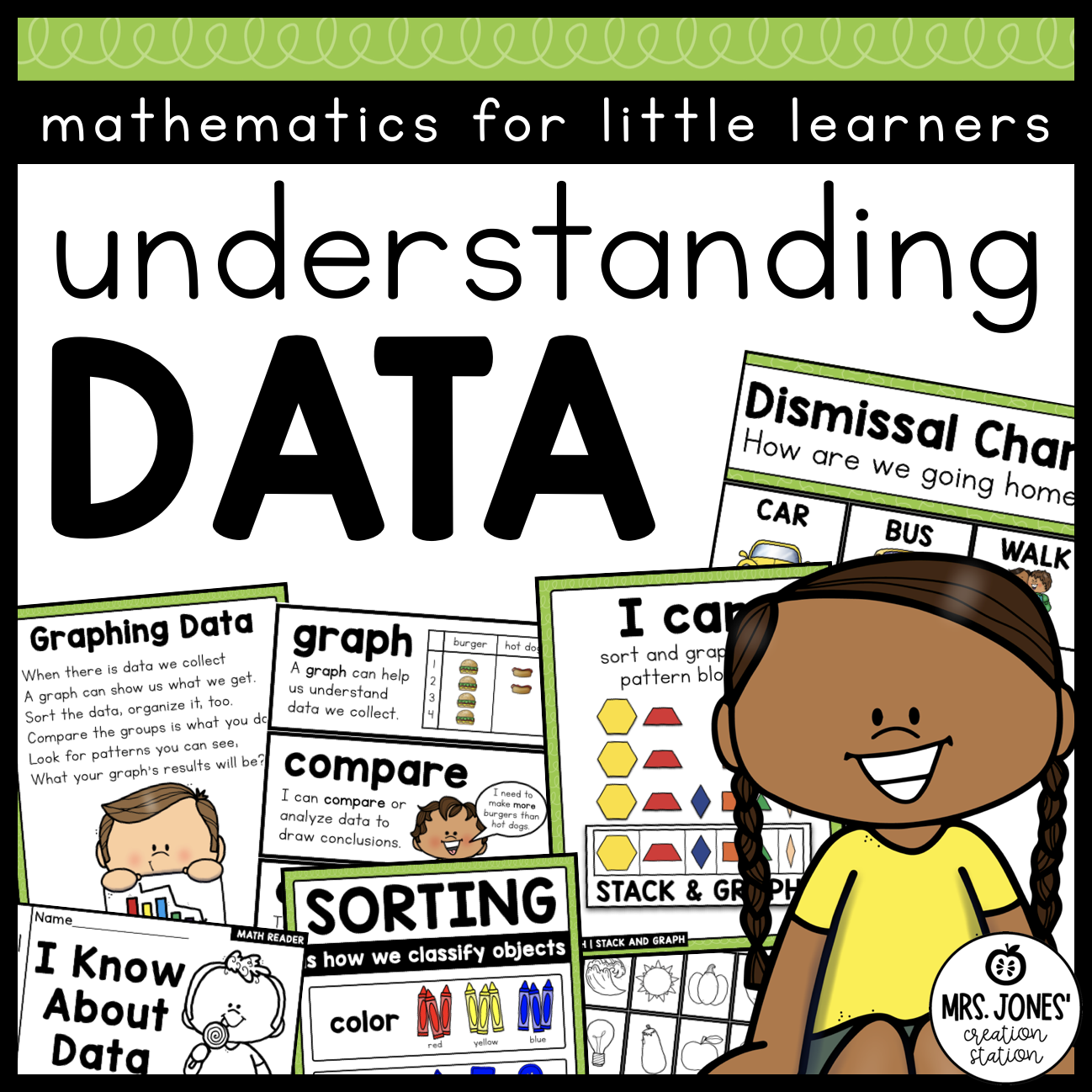
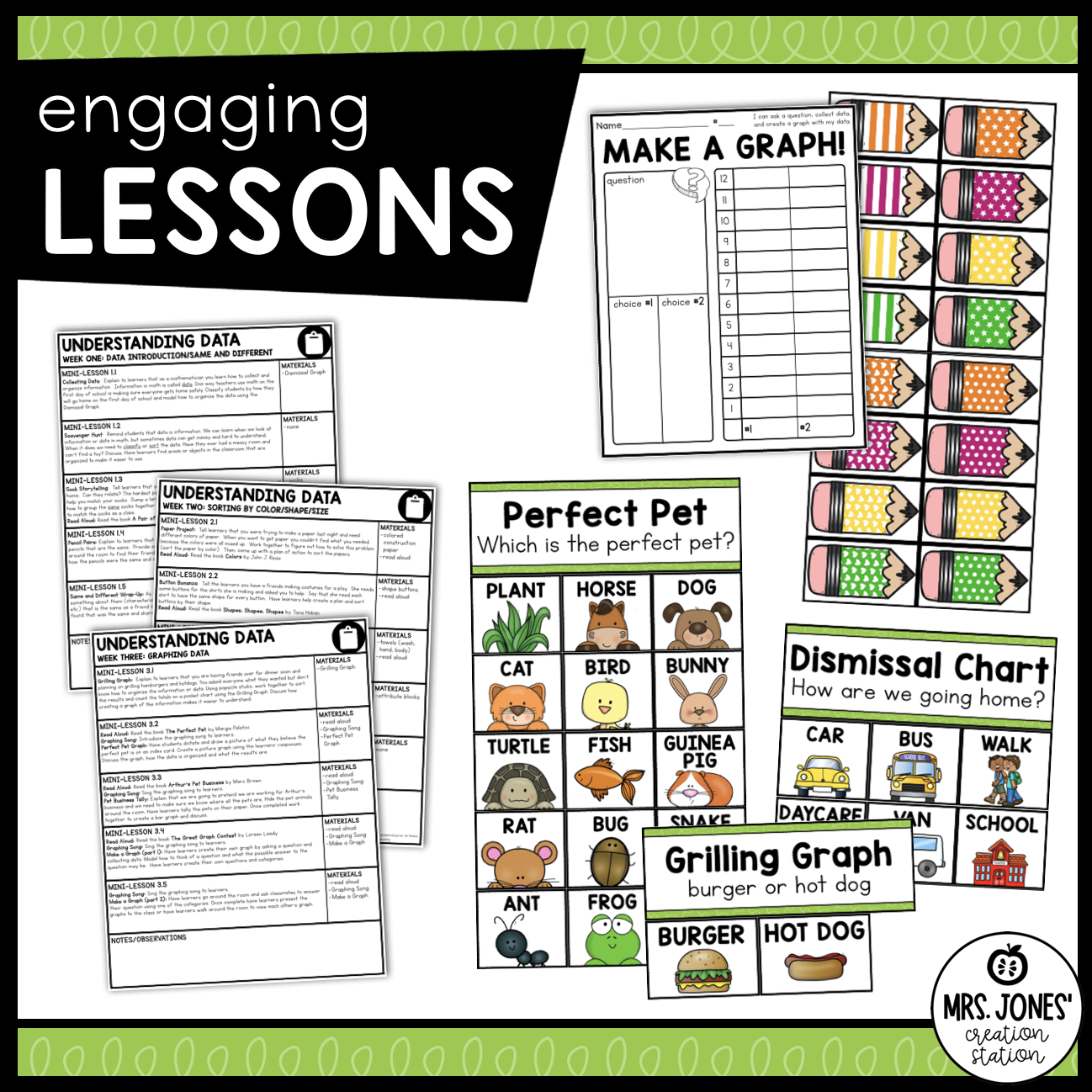
Build a strong foundation for early data and graphing skills with this Understanding Data Math Unit for Kindergarten and little learners. This three-week math unit includes 15 days of mini lessons that guide students from identifying attributes and sorting objects to collecting, organizing, graphing, comparing, and interpreting data.
Students begin with concrete concepts such as same and different and sorting by color, shape, and size. As their understanding grows, they use data to create graphs, compare categories, and discuss what the information tells them.
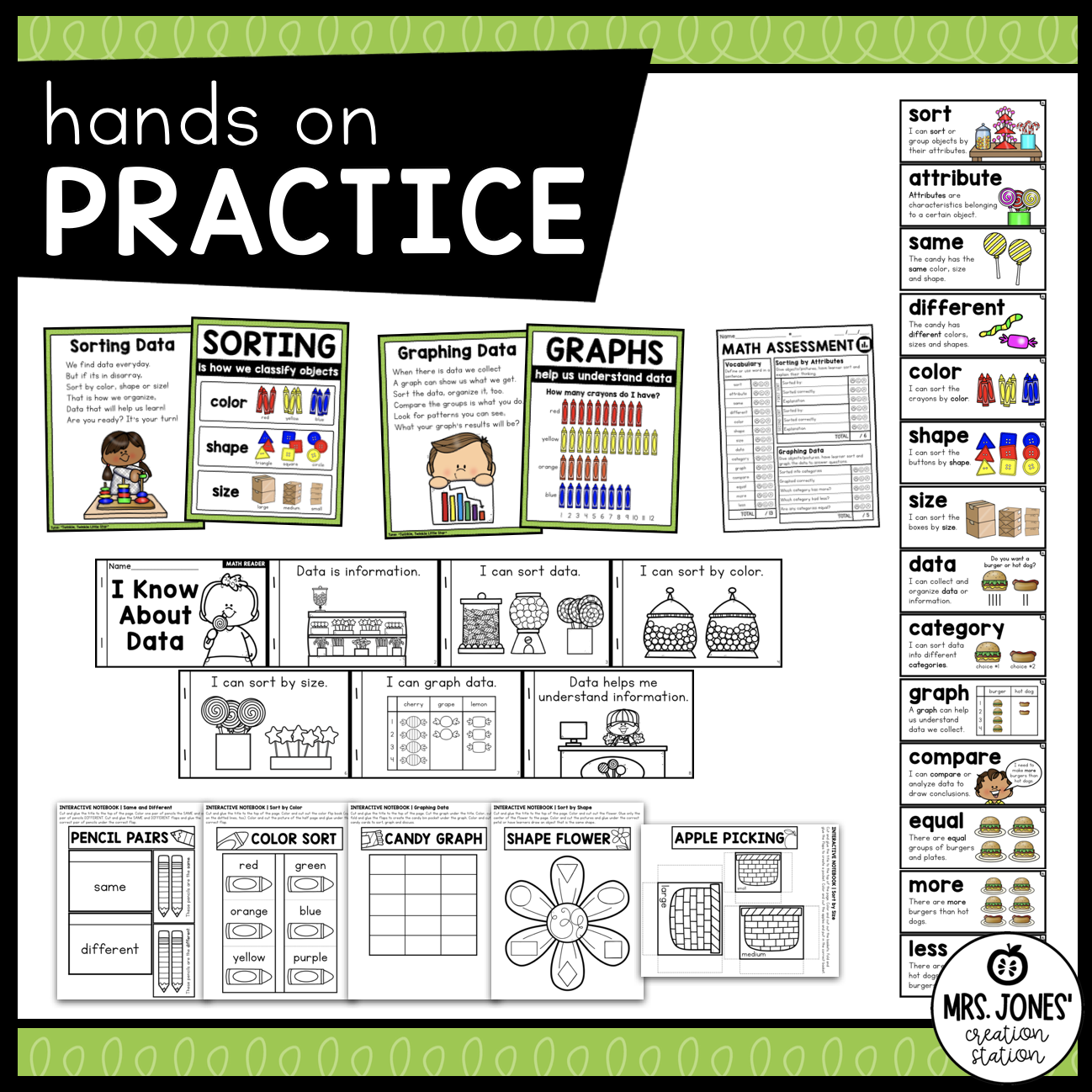
With whole-group mini lessons, hands-on math stations, vocabulary support, printables, an interactive notebook, a mathematical reader, songs, visuals, and assessment opportunities, you have multiple ways to teach and reinforce each concept.
WHAT’S INCLUDED
15 DAYS OF MATH MINI LESSONS
Three weeks of structured instruction covering early sorting, classifying, and data concepts.
Students work with concepts including:
- Same and different
- Attributes
- Sorting and classifying
- Sorting by color
- Sorting by shape
- Sorting by size
- Collecting data
- Organizing data
- Graphing data
- Comparing groups
- Interpreting information
- Using data to answer questions
The mini lessons incorporate hands-on activities such as pencil pairs, class surveys, sorting activities, and graphing experiences.
MATH VOCABULARY
Picture vocabulary cards provide visual support for important math terms, including:
- Sort
- Attribute
- Same
- Different
- Color
- Shape
- Size
- Data
- Category
- Graph
- Compare
- Equal
- More
- Less
These cards help students develop the mathematical language they need to explain their thinking during lessons and math stations.
SONGS AND VISUALS
Reinforce new concepts with student-friendly visual supports, including:
- Sorting Data song
- Graphing Data song
- Sorting visual
- Graphing visual
- Color and black-and-white options
- Slides for classroom instruction
MATH PRINTABLES AND INTERACTIVE NOTEBOOK
Students practice and record their learning with interactive notebook activities focused on concepts such as:
- Same and different
- Sorting by color
- Sorting by shape
- Sorting by size
- Graphing data
The unit also includes the I Know About Data mathematical reader to reinforce key concepts and vocabulary.
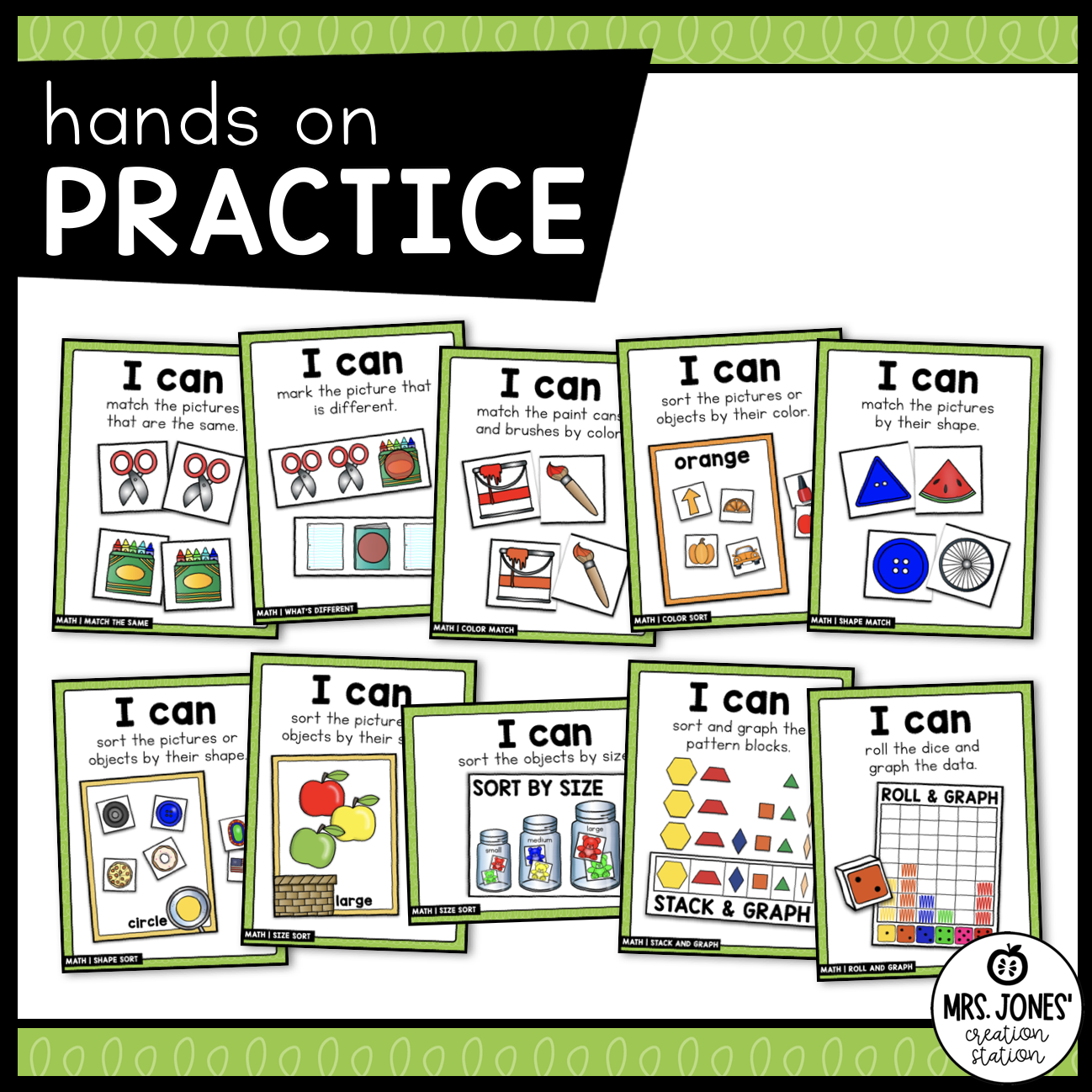
10 MATH STATION ACTIVITIES
Give students hands-on practice with math stations that reinforce the skills taught during the mini lessons.
Activities shown in the unit include:
- Match the Same
- What Is Different?
- Color Match
- Shape Match
- Shape Tracing
- Size Sort
- Sorting by Size
- Stack & Graph
- Roll & Graph
- Color Sort
Students sort, match, compare, classify, and graph while working with familiar objects, colors, shapes, and sizes.
ASSESSMENT
Use the included math assessment to check student understanding of vocabulary, sorting by attributes, and graphing data.
SKILLS COVERED
- Identifying same and different
- Recognizing attributes
- Sorting and classifying objects
- Sorting by color, shape, and size
- Collecting data
- Organizing data into categories
- Creating graphs
- Reading and interpreting graphs
- Comparing categories
- Identifying more, less, and equal
- Drawing conclusions from data
- Mathematical vocabulary
- Explaining mathematical thinking
WHY TEACHERS LOVE IT
- Provides 15 days of planned math instruction
- Moves from concrete sorting skills into early data analysis
- Combines whole-group instruction with hands-on math stations
- Includes vocabulary, visuals, songs, printables, and assessment
- Gives students repeated practice with important math concepts
- Math stations can be printed, laminated, and reused
- Supports students who need concrete examples and visual vocabulary
Teachers who have used the resource specifically mention the easy prep, engaging activities, vocabulary support, and ability to laminate and reuse materials.
HOW TO USE
Begin with the daily mini lesson to explicitly teach and model the new concept. Use the vocabulary cards, songs, visuals, and hands-on examples to build understanding together.
Then move the skill into math stations, small groups, interactive notebooks, or independent practice. As students progress through the unit, they move from noticing attributes and sorting objects to collecting and graphing their own data.
Use the mathematical reader for additional concept review and the included assessment to monitor understanding.


Reviews
There are no reviews yet.