

Build a consistent whole-group literacy routine with 5 interactive charts
Make your morning meeting more meaningful with this Literacy Morning Meeting Charts Bundle for Pre-K, Kindergarten, and First Grade. This resource combines 5 interactive literacy charts for practicing alphabet skills, rhyming, sentences, sight words, and syllables.
Even better, the bundle includes printable AND digital versions of all 5 literacy charts, giving you flexibility for different classroom setups and teaching styles.
Use the charts during morning meeting for a quick literacy review before moving into the rest of your day. You can also pull them into whole-group lessons, small groups, or intervention when students need focused practice with a specific skill.
Each chart uses a predictable routine that encourages students to participate instead of simply watching you teach. Students identify sounds, manipulate letters, count syllables, read sentences, practice high-frequency words, and explain their thinking depending on the chart being used.
As a result, you can change the literacy skill without completely changing the instructional routine.
Plus, the bundle grows with your students. Start with foundational skills such as alphabet recognition, beginning sounds, rhyming, and syllables. Then, use the sentence and sight word charts as students develop their early reading skills.
See how I use literacy charts during morning meeting
WHAT’S INCLUDED
5 Printable Literacy Morning Meeting Charts + Digital Versions
This bundle includes all 5 Literacy Morning Meeting Charts in printable and digital formats:
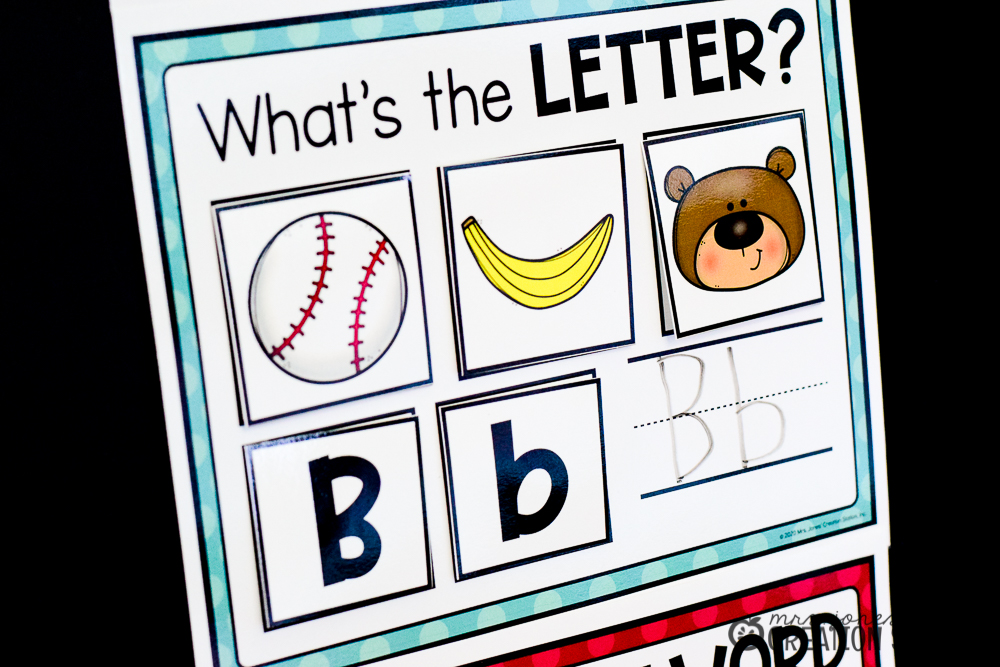
Practice alphabet recognition, letter-sound correspondence, initial sounds, uppercase and lowercase letters, and letter writing.
Students study colorful picture cards, identify the sound represented by the pictures, choose the matching uppercase and lowercase letters, and practice writing the letter.
The printable resource also extends beyond individual letters with cards for consonant digraphs and vowel teams, allowing you to continue the familiar routine as students progress into phonics.
Skills include:
- Uppercase letter recognition
- Lowercase letter recognition
- Letter-sound correspondence
- Initial sounds
- Letter matching
- Letter formation
- Consonant digraphs
- Vowel teams
- Early phonics
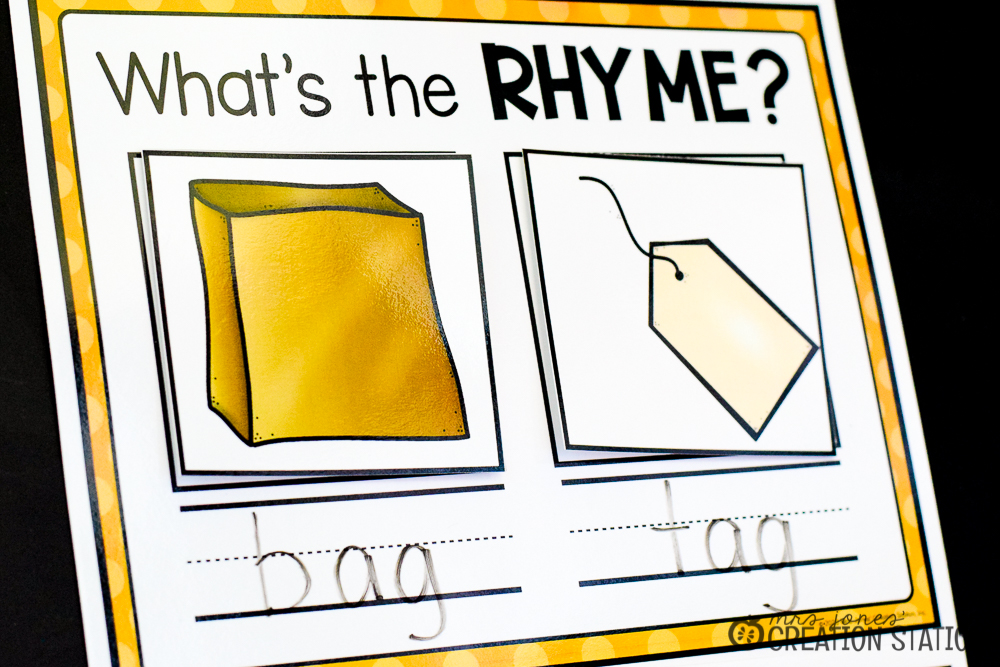
Build phonological awareness with the interactive “What’s the Rhyme?” routine.
Students name two colorful pictures, say the words aloud, listen for the rhyme, and write the corresponding words.
The picture pairs range from familiar short-vowel rhymes such as cat/bat and log/dog to more advanced patterns such as rain/train and moon/spoon.
Skills include:
- Rhyme recognition
- Rhyming words
- Phonological awareness
- Listening for shared sounds
- Oral language
- Vocabulary
- Word writing
- Sound-spelling connections
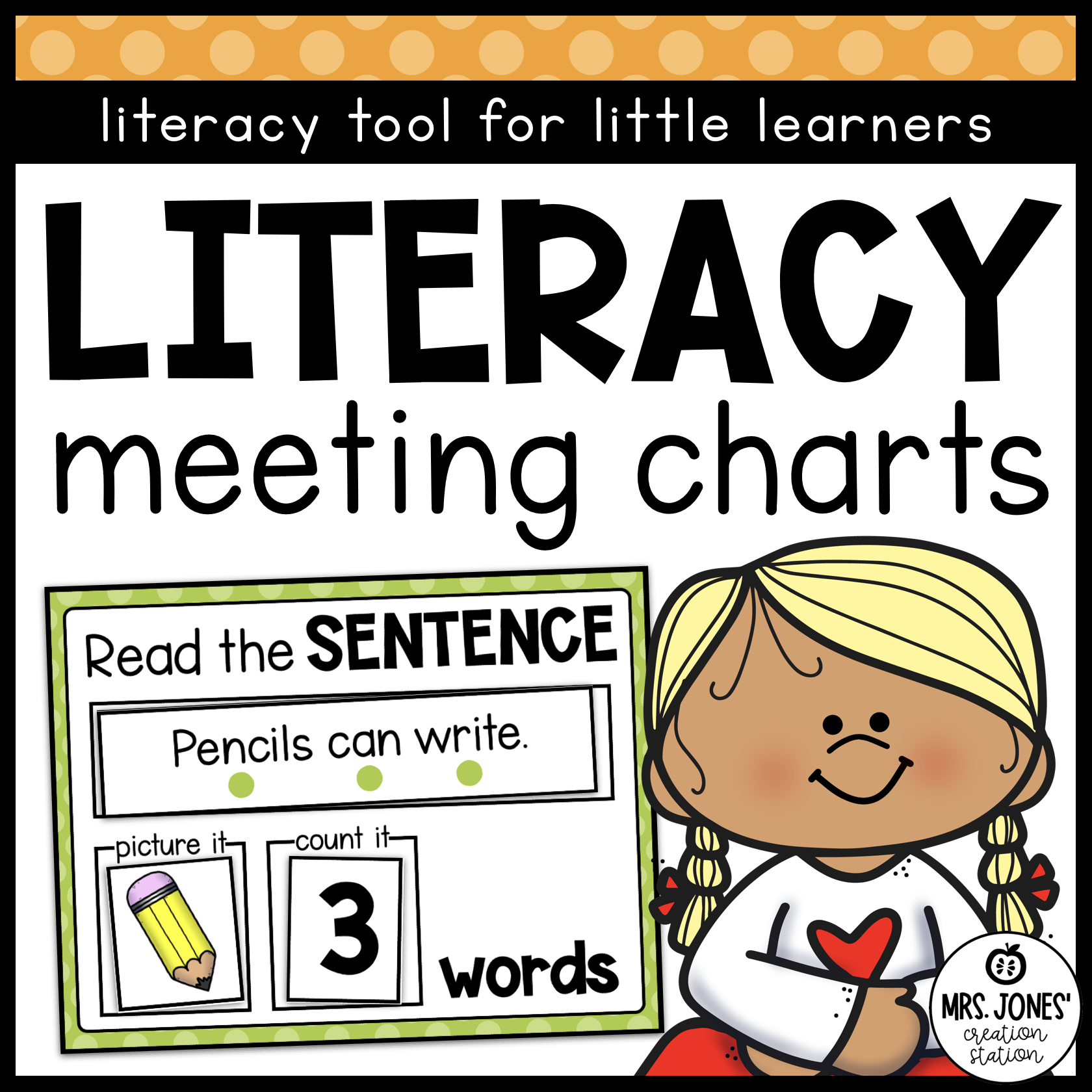
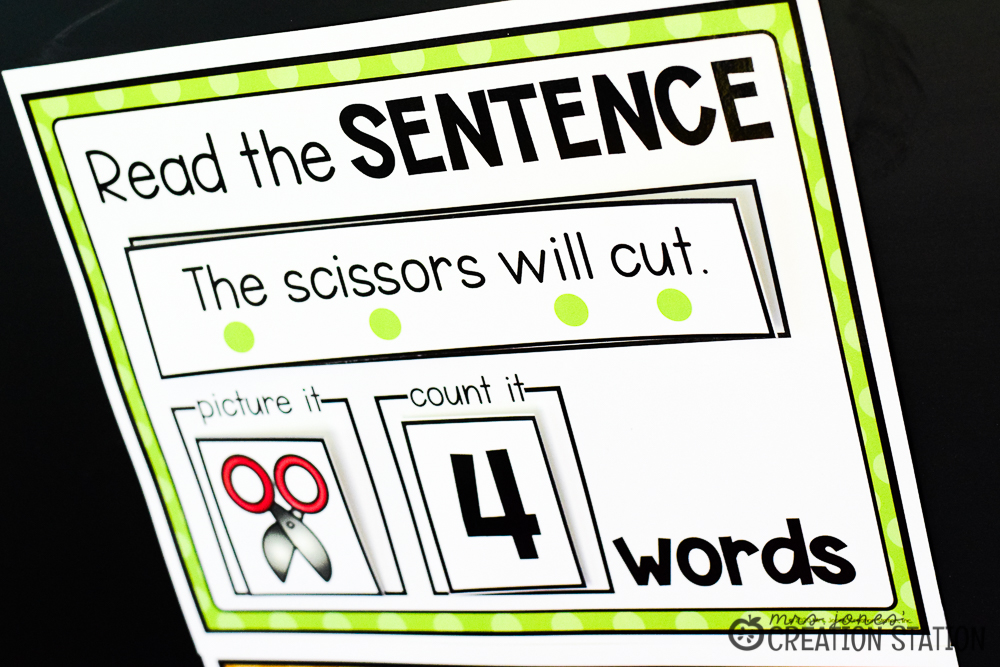
Teach concepts of print with a Read the Sentence, Picture It, Count It routine.
Students read a sentence, track the individual words, choose the coordinating picture, and determine how many words are in the sentence.
The printable chart includes 40 sentence strips, coordinating picture cards, and number cards 1 through 7.
Each sentence strip also includes a visual dot beneath every word to support one-to-one word correspondence.
Skills include:
- Concepts of print
- Sentence reading
- One-to-one word correspondence
- Print tracking
- Word boundaries
- Counting words in sentences
- Sentence comprehension
- Capitalization
- Ending punctuation
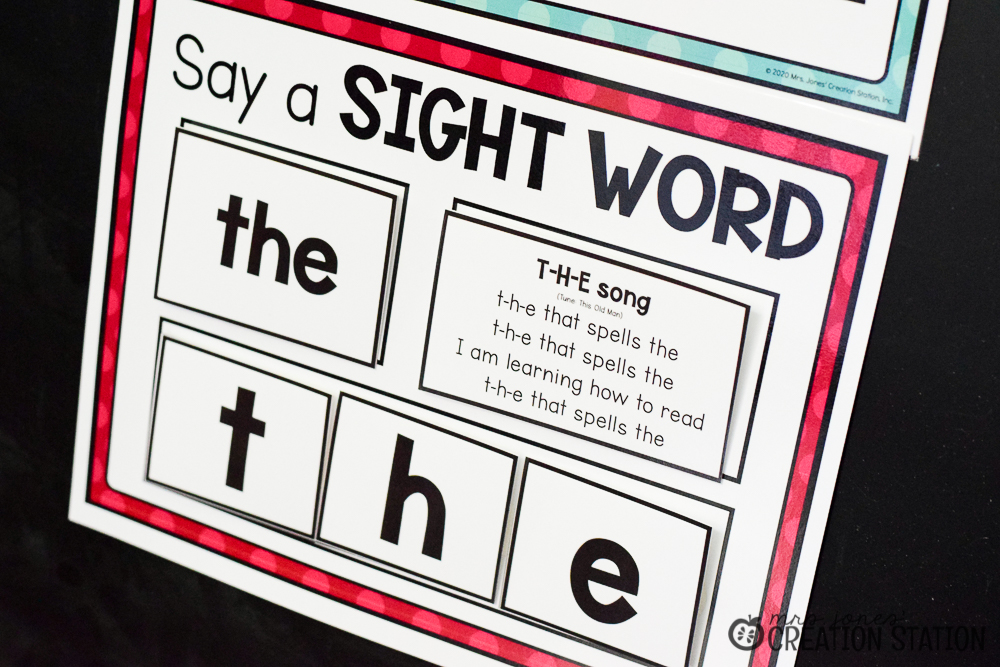
Make high-frequency word practice interactive with a read it, sing it, spell it, build it routine.
Students read the target word, sing a short spelling song, and arrange individual letter cards to build the word.
The printable resource includes 50 high-frequency words, with a word card, coordinating spelling song, and individual letter cards for each word.
Skills include:
- Sight word recognition
- High-frequency word recognition
- Word reading
- Sight word spelling
- Word building
- Letter sequencing
- Automatic word recognition
- Beginning reading skills
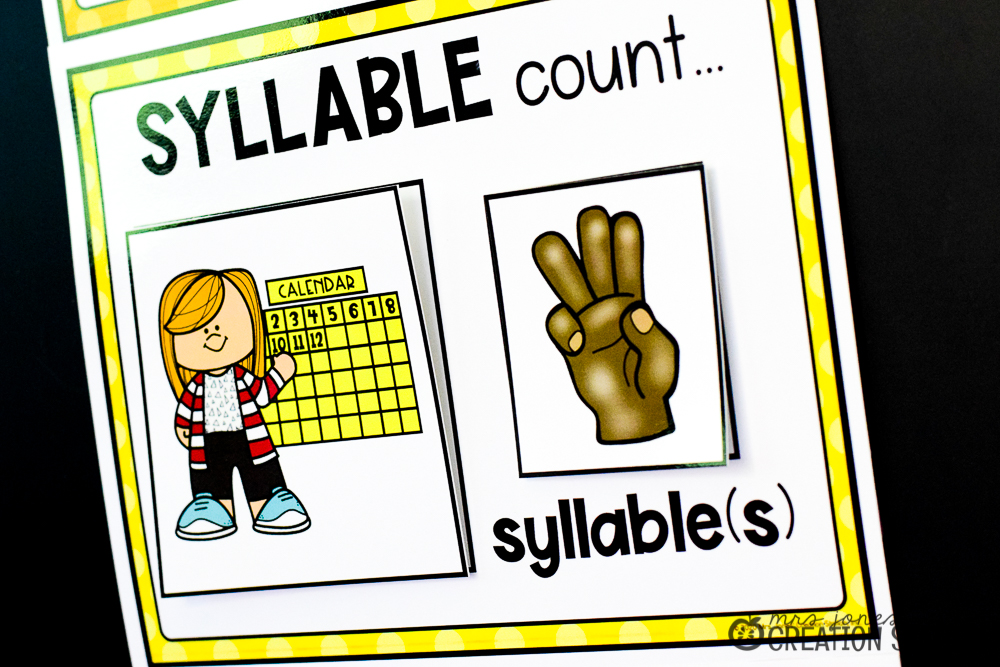
Help students hear and count the parts in spoken words with the Syllable Count chart.
Students name a colorful picture, say the word aloud, break the word into syllables, and choose the finger card showing the correct number of syllables.
The printable resource includes 40 colorful illustration cards and finger-counting cards for 1 through 5 syllables, with two skin-tone options.
Skills include:
- Counting syllables
- Syllable segmentation
- Phonological awareness
- Breaking words into parts
- Oral language
- Vocabulary
- Listening skills
PRINTABLE + DIGITAL VERSIONS
One of the biggest advantages of purchasing the complete bundle is the flexibility of having both printable and digital versions of all 5 literacy charts.
Use the Printable Charts
Prepare the printable charts for hands-on whole-group instruction.
Laminate the charts and pieces for repeated use. Then, add Velcro dots or magnets if you want students to physically manipulate the cards during your lessons.
Use the Digital Charts
The included digital versions give you another option for displaying and using the literacy charts during instruction.
Use the format that works best for your classroom setup, lesson, and students.
You can also switch between printable and digital throughout the year instead of committing to only one format.
SKILLS COVERED
Across the complete bundle, students practice:
- Alphabet recognition
- Uppercase and lowercase letters
- Letter-sound correspondence
- Initial sounds
- Letter formation
- Early phonics
- Consonant digraphs
- Vowel teams
- Rhyming words
- Rhyme recognition
- Phonological awareness
- Syllable segmentation
- Syllable counting
- Sight word recognition
- High-frequency word recognition
- Sight word spelling
- Word building
- Concepts of print
- One-to-one word correspondence
- Sentence reading
- Sentence comprehension
- Word boundaries
- Print tracking
- Vocabulary
- Oral language
- Early reading skills
HOW TO USE
Morning Meeting
First, choose the literacy chart that matches the skill you want to review.
Next, display the printable or digital version for your students.
Then, model the skill and invite students to participate in completing the chart.
Because each chart focuses on a specific early literacy skill, you can rotate them as your instruction changes throughout the year.
Finally, revisit previously taught charts whenever students need additional review.
Whole-Group Literacy
Use the charts to introduce, model, or review foundational literacy skills with your entire class.
For example, use the Alphabet Chart during letter and sound instruction. Later, pull out the Sentence Chart when students are developing concepts of print and beginning sentence-reading skills.
Small Groups
Choose a chart that matches the needs of a particular group.
The visual and interactive format makes it easy to slow down the activity, model your thinking, and give students additional guided practice.
Intervention
These charts also provide a predictable format for targeted literacy intervention.
For example, students struggling with phonological awareness can work with the Rhyming or Syllable Charts. Students who need additional alphabet support can work with the Alphabet Chart.
Meanwhile, the Sight Word and Sentence Charts provide additional practice as students begin working with printed words and connected text.
WHY TEACHERS LOVE IT
- Includes 5 interactive literacy charts
- Includes printable versions of all 5 charts
- Includes digital versions of all 5 charts
- Supports morning meeting literacy instruction
- Works for whole-group lessons
- Provides options for small groups and intervention
- Covers multiple foundational literacy skills
- Encourages active student participation
- Provides visual and hands-on learning opportunities
- Uses predictable instructional routines
- Makes quick daily literacy review easier
- Supports Pre-K, Kindergarten, and First Grade learners
- Allows teachers to choose printable or digital instruction
- Gives students repeated practice without using the exact same skill every day
ONE ROUTINE, MULTIPLE LITERACY SKILLS
Morning meeting is already part of the school day, so it can be a natural place to fit in a little focused academic review.
For example, you might practice letter sounds with the Alphabet Chart one day and count syllables with the Syllable Chart another day.
Next, bring in the Rhyming Chart for phonological awareness practice.
As students progress, use the Sight Word and Sentence Charts to strengthen high-frequency word recognition, concepts of print, and beginning reading.
Because students become familiar with interacting with the literacy charts, you can focus more attention on the skill being taught and less time explaining a completely new activity.
PERFECT FOR
- Morning Meeting
- Pre-K Morning Meeting
- Kindergarten Morning Meeting
- First Grade Morning Meeting
- Whole-Group Literacy
- Whole-Group Phonics
- Daily Literacy Review
- Phonological Awareness
- Foundational Reading Skills
- Small-Group Instruction
- Literacy Intervention
- Reading Intervention
- Homeschool Literacy Instruction
WANT TO SEE THE CHARTS IN ACTION?
Wondering how literacy charts can fit into an actual morning meeting?
I use literacy charts to add focused academic practice to the morning routine while keeping students actively involved. Students can identify sounds, manipulate cards, read, count, discuss, and help complete the charts together.


Reviews
There are no reviews yet.